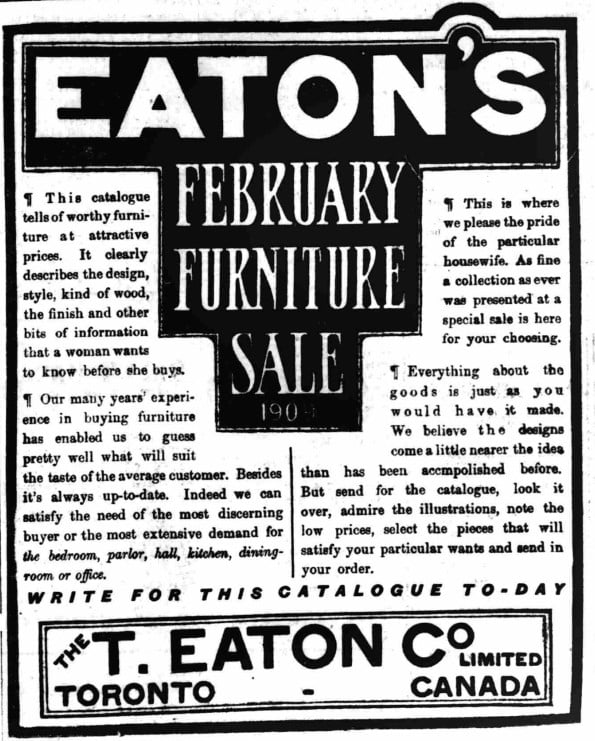
As I continued to investigate the story of Billy Butlin, my appreciation for the meaning behind his legacy and the hard work he put in to achieve it intensified. The story of the five pounds originates in 1921, when Billy Butlin was still in Canada. On page 59 of his book, it is revealed that Billy Butlin was succeeding at a company called Eatons. This was his second time working there, as he had previously left to join the army during the war. I was taken aback to discover that the first Butlins stall was not in England, but rather in Canada... unofficially, of course, since it is not definitively known if the name Butlin's was used. Nevertheless, it was an exciting discovery to find that this was the first venue where Billy Butlin opened a stall at a fair.
Billy Butlin had always known that he was going to be a success and that life was going to change for him in some shape or form. What was a puzzle to him was what this success was going to be and how he was going to achieve this level. It was in 1920 that the first hint of his future would come to him as he attended the opening of the Toronto National Exhibition.
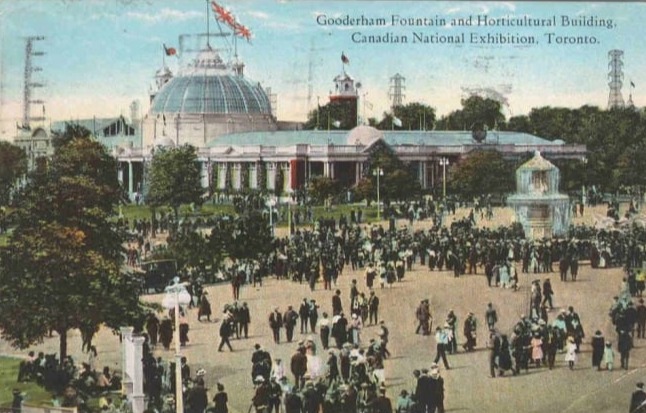
Also known as The Exhibition, The Ex and Toronto National Exhibition.
This exhibition's history goes back to 1846, originally called the Provincial Agricultural Fair of Canada West, which was organised by the Provincial Agricultural Association. It was hosted in the Toronto area, near King and Simcoe Streets. The fair proved to be quite successful, and by 1847, it started touring additional locations.
In 1878, the Toronto City Council made a proposal for the fair to be permanently located in Toronto. However, this request did not advance since the exhibition committee had already resolved to transfer to another city in 1879. This decision had an important impact on the future, which would also include a part in Billy Butlin story.
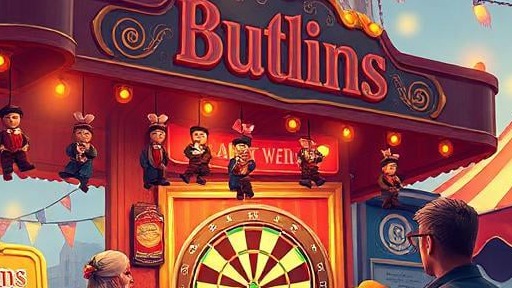
Billy Butlin recounts in his book (page 59) that he recalls visiting an exhibition to explore its offerings and to reminisce about his days as part of a family of travelling showmen. As he wandered through the exhibition grounds, he was taken aback to find that there were no dart stalls present. This was quite unusual, as he remembered the popularity of dart stalls in England, making their absence at this fair surprising for him. This moment marked an important point in the Butlin's timeline, as Billy Butlin decided to take his holiday leave from Eatons and set up a dart stall at the fair, offering Kewpie Dolls as prizes. The stall proved to be a tremendous success, attracting many customers who came to enjoy his offerings, prompting him to shift his focus from a career at Eatons to pursuing a path as a showman. He felt an inner conviction that this was the right future for him, rather than the one he was currently on at Eatons.
Billy Butlin was greatly affected by the success of the stall, which occupied his thoughts until he could no longer ignore his feelings about what it had meant to him. The idea of the stall became stronger when Billy Butlin described an encounter with a stranger. They discussed the stall and its success at the exhibition fair, leading Billy Butlin to conclude that he needed to change his career towards a showman approach. On page 59 of Billy Butlin book, we learn that the stranger informed Billy Butlin about a new carnival he was launching in Renfrew, Ottawa, suggesting that Billy Butlin could realise his dream by opening a stall there. This was precisely what Billy Butlin had been searching for, the opportunity to follow his dreams as he agreed to participate in the carnival. With his earnings, which were equivalent to £400, Billy Butlin decided to pay in advance for two stalls, as he began to devise his plans for managing them. They shook hands and settled on the arrival date, with Billy Butlin now feeling that this was the moment he had been anticipating, marking a breakthrough towards a work style he believed was right for him.
With his earnings already used for the advance payment on the stalls, Billy Butlin found himself needing to borrow money for the travelling fair to Renfrew. He approached his department manager at Eaton's with a great deal of confidence and resigned from the company to begin a new career journey. On the train, he pondered over plans, expansions, expectations, prizes to offer, and how to ensure the stalls would be profitable for him and his future. As the train reached Renfrew, anticipation grew as Billy Butlin stepped off to breathe in the air of a new location, feeling that his life was on the verge of a major change. However, as he roamed around, he started to feel concerned when he couldn't locate the carnival that the stranger had mentioned. After seeking help from the locals, he soon realised that a major obstacle stood in the way of his dream. I could only picture Billy Butlin sitting on a bench, coming to the painful realisation that the stranger he had talked to had deceived him, taking all his money in a scam, and more importantly, robbing Billy Butlin of his opportunity to run the stalls.
It is widely known that Billy Butlin is a person who never gives up and has a mind that is good at finding solutions to problems. When he assessed the options available to him at that time, he realised that there was only one correct path he could take to get back on track toward his future. As he boarded the train back to Toronto, he felt a mix of frustration and sadness over the events that had unfolded, which made him understand the importance of learning from this experience. Upon his return to Toronto, he approached Eatons without the confidence he once had and discussed the possibility of regaining his previous position in the art department. In his book, Billy Butlin refers to this situation as a "humble" request to reclaim his job in the art department. After their conversation, Eatons and Billy Butlin shook hands, but it was clear that he still had a long journey ahead, with one thing unmistakably clear... he was not going to give up on hope or his dreams, just choosing a different way to achieve them.
This experience wasn't entirely negative, as Billy Butlin had learned three important lessons from his trip.
* The first lesson was to understand more about what was being offered and to ask more questions to make sure that everything was looking good, without a large advance payment being given.
* When making a decision, think more thoroughly before saying yes, with the understanding of all areas that you need for this to be successful
The third lesson proved to be the most important for Billy Butlin, as this experience revealed another aspect he had overlooked. This experience demonstrated that his career path lay within the showman industry, where he felt a sense of belonging. This was the missing element in his life that needed to be fulfilled; the showman's lifestyle was where he felt accepted, and he recognised that his future career would need to align with this direction. He would confirm this feeling, as his family background supported it, and in his book, he mentions, "..that I had the showman's blood in my veins." It was a challenging experience that opened his eyes to three crucial areas, which would be important to the history of Butlins. The first lesson would aid in the development of his business, the second would connect to the locations of his camps, parks, and hotels, and the third involved researching the roles of the showmen industry... all three essential areas that contributed to Butlins' success.
Grateful to have his job back at Eatons, Billy Butlin found it difficult to let go of the showman lifestyle and the fact that he was on the verge of realising his dream. The memories of travelling the fairs with his mother, Bertha, in the West Country made it even harder to dismiss this notion. Although Billy Butlin recognised that Eatons provided him with a stable income, deep down, the call of the travelling showman urged him to embrace that life. On page 60, he recounts his return to England during the war and the emotions that accompanied it. It was a remarkable sensation, and the longer he stayed at Eatons, the more he felt compelled to initiate a change. While he had no negative feelings towards Eatons and appreciated how well the company treated him, he often reflected on the idea of "an open-air life, not tied to a desk," which echoed in his thoughts. This time, he intended to carefully consider his choices and discuss the available options with his mother, Bertha.
Currently in Butlins (as of 2026)
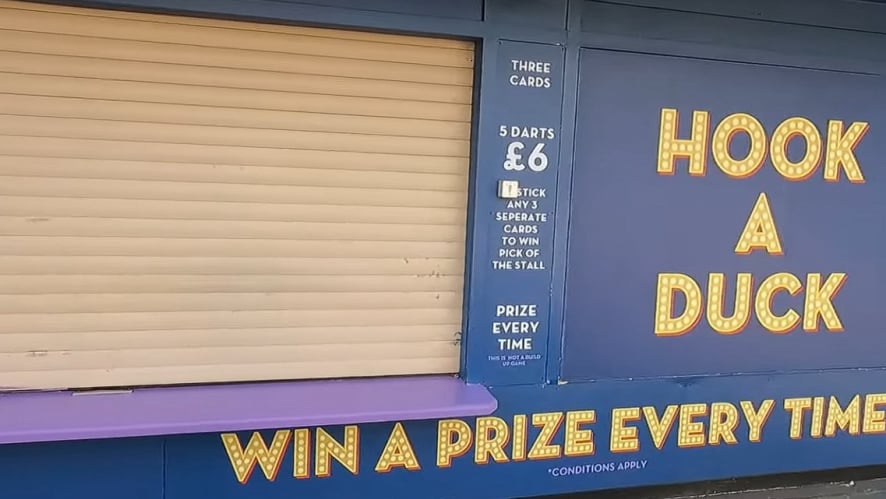
Butlin's (as of 2026) features stalls at its resorts to highlight their significance in the Butlin's story. As shown in this photo, the dart stall remains a prominent attraction. Here, you can win a prize every time, and for £6, you receive five darts. The history of this stall is closely tied to the story of Billy Butlin, as it was this game that sparked the vision of the businessman he would eventually become.
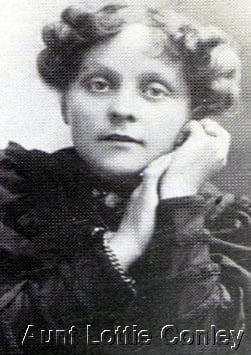
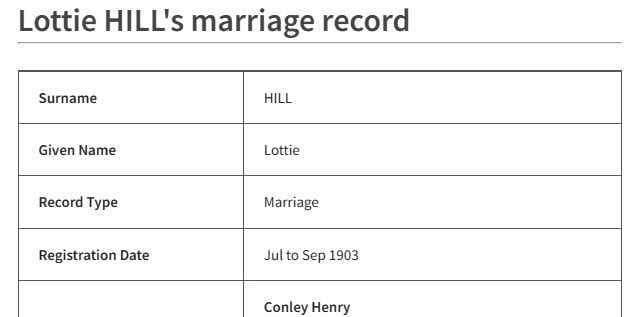
In 1921, after discussing everything he could with his mother, Billy decided to change his career path and return to England, where he could join his family in the fairground business. Bertha was very supportive of her son and reached out to her sister, Lottie Coneley, for assistance with Billy's move from Canada back to England. This time, Billy Butlin made this decision after careful consideration and with a plan, while challenging, he promised to bring him rewards. Bertha (his mother) also worked at Eatons and provided him with some money for his journey, hoping he would arrive back in England safely. However, starting his journey back to England was not easy, as he lacked the funds to buy a ticket, but in true Billy Butlin fashion, he was determined to make it happen.
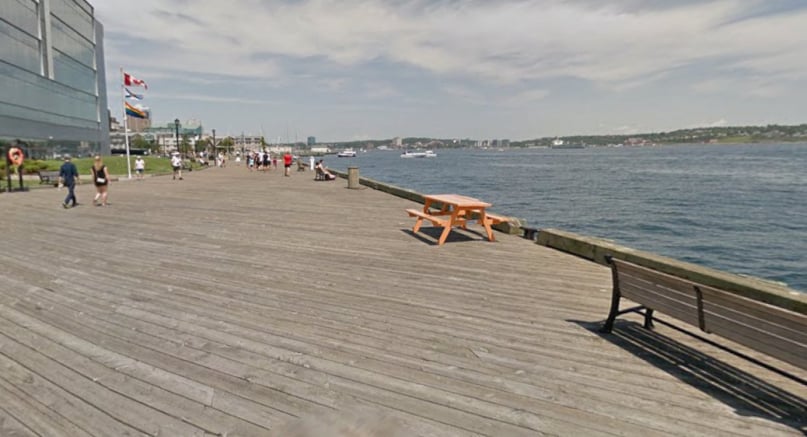
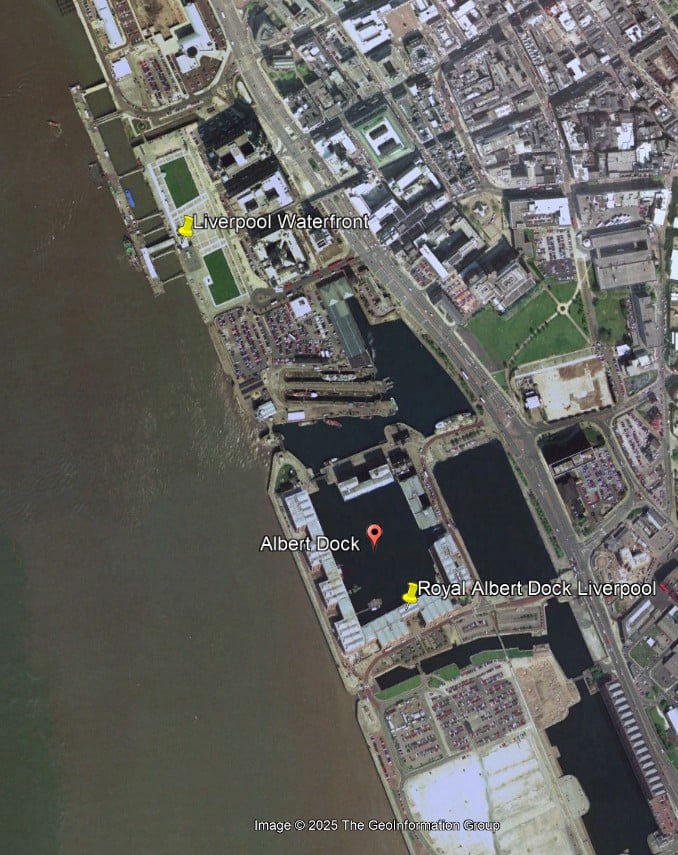
The initial stage of his journey involved reaching Halifax, Nova Scotia, and the sole method he could utilise was the freight trains, which he referred to in his book as "rode the rods." This demonstrated his determination, as achieving this was no simple task; nevertheless, it was successful, and he would eventually arrive in Halifax, Nova Scotia (as shown in the photo above). Billy Butlin learned that job opportunities were available in Halifax to secure a passage back to England, given that many British seamen were departing for Canada. His objective was to locate a cattle ship, as they needed individuals who were unskilled to accompany them on the voyage. After having a discussion with the ships along the waterfront, Billy discovered a vessel named the Scandinavia who wanting crew. The captain welcomed him aboard to assist with feeding, watering, and, as Billy describes in his book on page 60, "muck out" the cattle. His plan to return to England was set in motion, and he acknowledges that the journey was challenging, as they crossed the Atlantic, which made him feel nauseous. Upon arriving in Liverpool on February 17, 1921, the captain paid Billy Butlin five pounds for the work he had done whilst on the ship.
This is the background of the story about beginning with five pounds and how he came into possession of that money. At this moment in Billy Butlin's experience, this would have been the only money he had on him and he was required to spend it wisely.
Billy Butlin was in Liverpool, England, and he understood that it was time to start on the next part of his plan to fulfil his dream. His initial step was to find a seamen's hostel, where he could spend the night and regain the energy needed for his journey to Bristol, where his aunt would be expecting him. The following morning, Billy assessed that his five pounds had to last for the trip, and there was only one way for him to make it to Bristol from his current position. He intended to hitchhike from drivers who were willing to provide him with a ride, but he mentioned in his book on page 61 that this was never an easy task due to the limited traffic in the 1920s. The plan was underway, and it would take Billy Butlin five long days to reach Bristol from Liverpool, but his future ambitions kept him focused, and he knew that this was where he was meant to be. There would be nothing that could prevent Billy Butlin from realising his dream, and one thing was certain: he was not ready to give up.
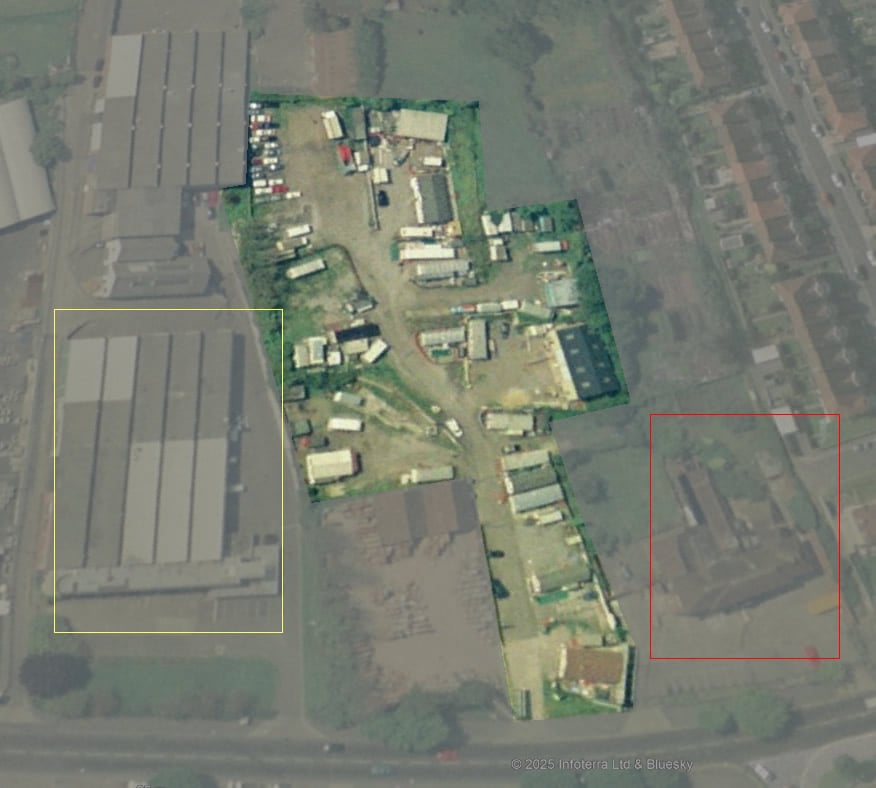
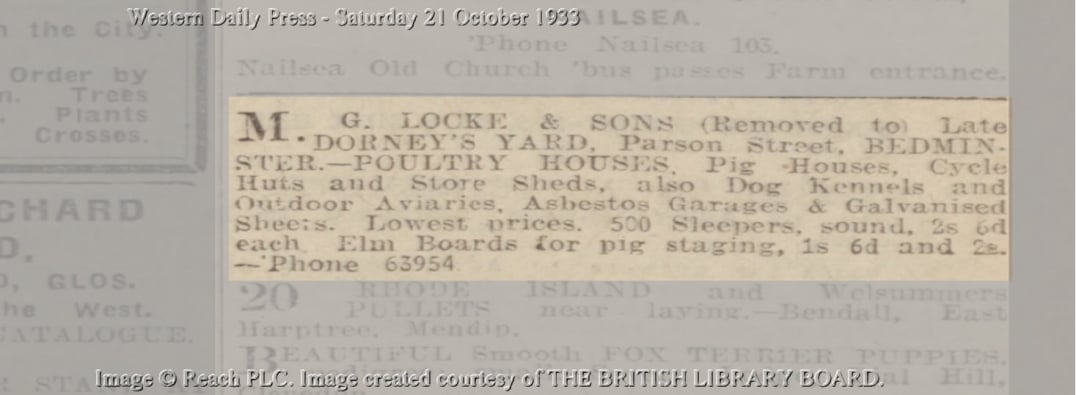
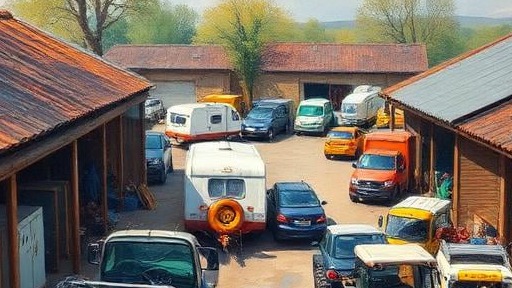
The lengthy journey concluded when Billy Butlin arrived at Parson Street in Bedminster, Bristol. On page 61, he recalls a yard known as "Dorneys Yard," which was used by travelling showmen for storing their lorries and caravans during the off-season. This location also served as a site for repairing their stalls and rides. Eventually, Dorneys Yard was renamed "Locke's Yard". At this point, I felt the need to delve deeper into this subject and discovered some amazing information. Billy Butlin describes this area as "it lies sandwiched between a dairy and the Enterprise public house on Parson Street, Bedminster." I was eager to explore this region further, as it is where Billy would start his Butlin's adventure in the United Kingdom and launch his first British stall.
Let me first explain the photo above. It is a Google Earth Pro image of the Parson Street area in Bedminster. The red square area indicates where the Enterprise public house is located, which I was able to find through websites that investigate lost pubs. However, the diary was much more difficult to locate, as there is nothing online that suggests it ever existed. According to the information provided by Sir Billy Butlin, I would propose that the yellow square represents this area. The highlighted area likely corresponds to the yard, and Billy Butlin indicates that Dorneys Yard was much larger in the 1920s, but it became smaller when it was renamed Lockes Yard. This conclusion is based on all the research I have conducted, which I will present further below.
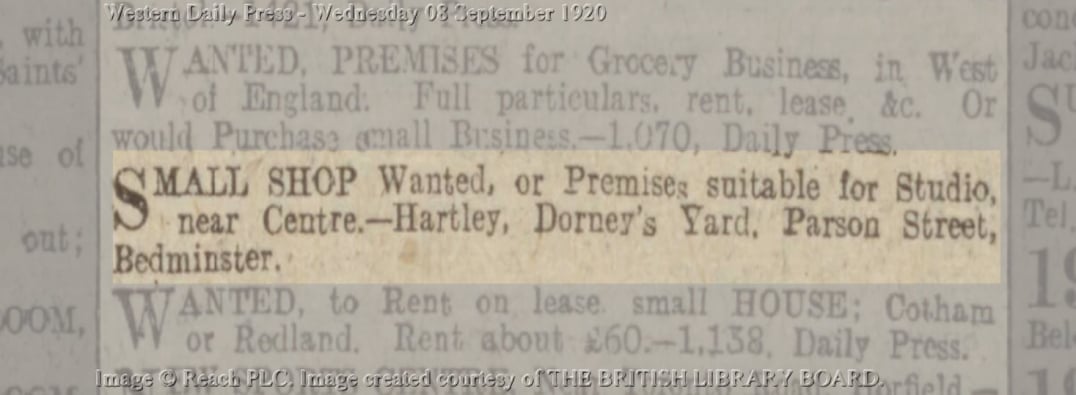
Found on the British Newspaper Archive website - Link
As you can see in this advertisement, it refers to the Dorneys Yard in Parson Street in Bedminster, Bristol. This is the location that Billy Butlin talks about in his book on page 61 and confirms the name.
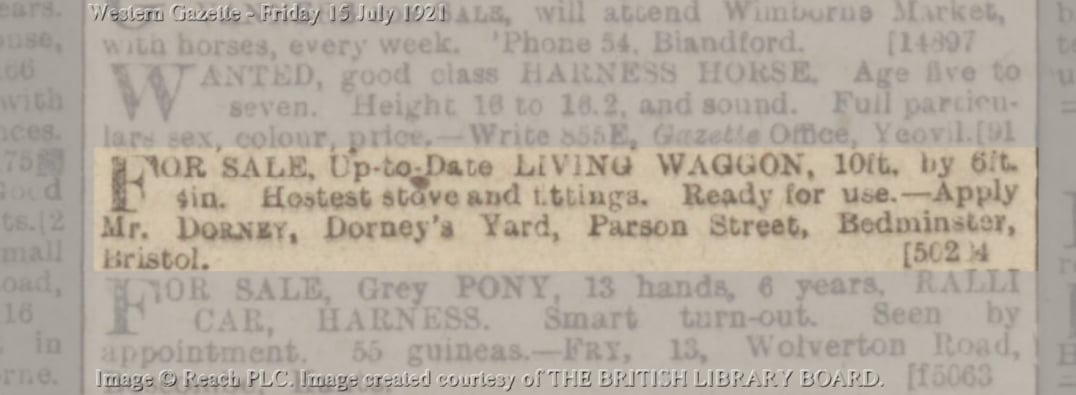
Found on the British Newspaper Archive website - Link
This is an important advertisement as Sir Billy Butlin mentions the living wagons on page 62 when he arrives at the yard, where he sees caravans and the living wagon, an amazing find.
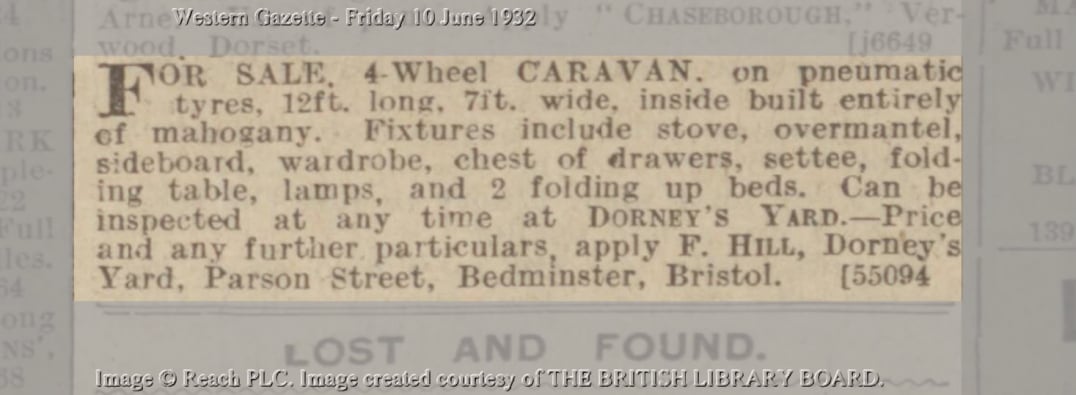
Found on the British Newspaper Archive website - Link
This was an interesting advertisement to find, as I noticed a link to the Butlins history. I can not confirm that this is correct, and there will be some who read this who will say "nope," but hey, I am going to tell it anyway. I found it interesting that a caravan was for sale and that you had to contact F. Hill, which I later found to be Fred Hill. I have checked the family tree, and there is no Fred Hill shown....yet, but at the same time, it could be just by luck...in the same yard the Hills family travelling showman would be based at times....ummmm...interesting don't you think?
Found on the British Newspaper Archive website - Link
This is advertisements allows us to see the link between the name Dorneys Yard and the new name of Locke Yard, which comes later on in the timeline. Take note of the items included in this listing, which is featured in the Billy Butlin story book on page 61
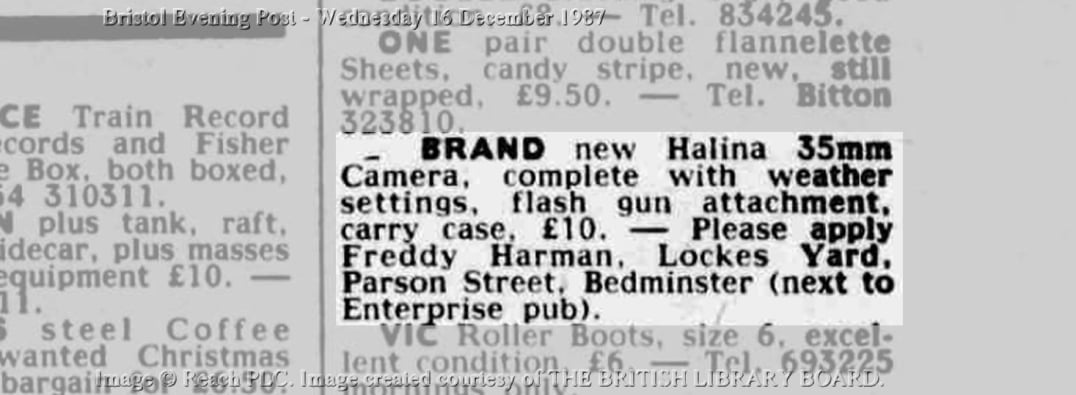
Found on the British Newspaper Archive website - Link
This important advertisement confirms the names in the book, including that the yard was located next to the Enterprise Pub, which is shown above. An excellent find.
Billy Butlin had at last reached Parson Street, where he was looking for Dorney's yard, identifiable by the double black-painted gates. As he drew nearer to the gates, the sounds of the showman in the background provided him with much comfort. When he opened the gates, he was greeted by the sight of around forty to fifty families surrounding the caravans and some living wagons. This scene brought him a lot of joy as he searched for his Aunt Lottie's caravan, which was usually the first one on the right as he entered. While he looked around to see traction engines, horses and people painting fairground roundabouts, he heard the cheerful words, "Here's Bertha's boy," (page 62) which made Billy Butlin smile broadly, feeling at home. His aunt hurried over to him, giving him a big hug, overjoyed to see her nephew arrive safely in the yard. This was the second part of his plan completed, as he felt secure, wanted, and assured that he was in the right place, with his dreams now feeling closer than ever. It had been a struggle to reach this point, but he had finally come to the warmth of family.
After the hug, I believe Billy would describe his journey over a meal, as he was quite hungry at that time due to his desire to save as much money as he could. This family reunion must have brought a great deal of happiness to both of them, especially since his Aunt Lottie offered him a bed for the night. Billy does remember that the bed was cramped, but it didn't concern him at all, as he recalls saying, "I never felt more comfortable anywhere in my life." Billy Butlin explains this beautifully in his book, which I recommend you purchase, as I may have missed some aspects of this story. However, up to this point, we can see that the Billy Butlin we have here is determined and has achieved what many would have turned down. To me, this feels like fate; his future had to be realised, but he needed to take the steps to make it happen, which we all know he did. It's the journey that matters, and what an impressive person he is! My respect for him grows every time I look deeper into his history.
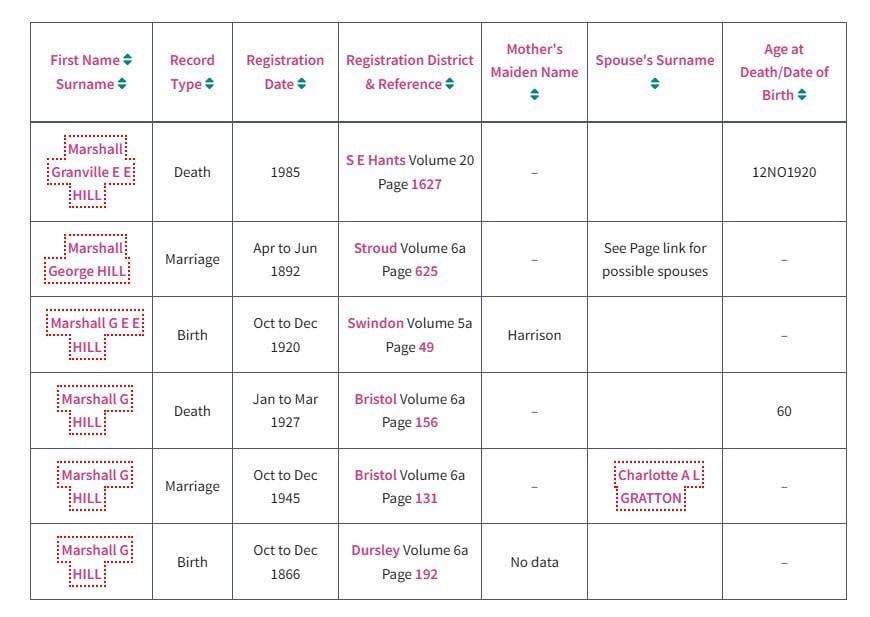
On the following morning, Billy Butlin was extremely pleased to be in Dorney's yard, ready to start the third part of his plan, which involved meeting his uncle, Marshall G Hill, who was the head of the Hill family at that time. This task was not going to be straightforward, but Billy was aware that he needed to take the necessary actions to fulfil his dreams, so he sought advice. Initially, his uncle was not very encouraging and suggested that he should return to Canada, a thought that Billy considered, but he knew that, realistically, this was no way he could find the funds or the means to go back. The only answer was to move forward with his ambitions of becoming a showman.
The challenge Billy faced was that he seemed to be at a point where he had nearly burned his bridges, though not entirely. He was aware that hard work brings rewards, especially since he had made a free move from Canada to England. By returning to his uncle, he aimed to showcase his determination to pursue a life as a showman. Through his abilities, he gained acceptance to obtain a small Hoop-la stall. This story carries on in the Hoopla stall pages, available via the button below or through the menu (Butlin's General - Hoopla Stall).
Delving into the history of the five-pound legacy has taught me that the beginning of Butlins was going to be tough. Discovering how Billy Butlin made his way from Canada to England through clever methods has demonstrated just how impressive he is. Here are the main points I appreciate about Billy Butlin in this account.
1. He was conned but found a way to look past it and move on. What shocked me is that he had the money, then it was all gone, but somehow, he found a way to make it happen.
2. Travelling from Toronto to Halifax had indeed shocked me as he would "Ride the rodes", which I never knew up to this point. What a great way to show determination and to achieve your dreams in any way possible.
3. To be able to find work for passage back to England was something I did not see coming. I knew of the cattle ship story back to England, but I have to admit that I was unaware that he did so much to make it happen, and he was willing to do what he needed to make it happen
4. That he found a way to travel from Liverpool to Bristol by hitchhiking, which I believed would have involved a great deal of walking on little food that he ate. That is just amazing, to think that he served in the war, worked in Canada, lost all his money, but still has the determination to do what was needed...well, what can I say but "what a great guy!"
5. To never give up on his dream, and he did not! His family was supportive, yes, his uncle was a bit hard on him, but I believe this was done in the nature of making sure that Billy was in it for the correct reasons and with all his skills, he was able to show this.
I have had a great time and joy working on this story. My respect for him has only grown higher, and his status for this website and me of being a hero is correct. What an impressive person who has done what many could not with five pounds. Just think about that for a second, travelling all the way from Canada on your own to Bristol, England....with only five pounds. Amazing, and you can clearly see that this was meant to be; fate had plans for him, and he was to succeed... before the camps and hotels opened. Remember that at this stage, the land the camps would be on is not what they will become yet, meaning that Butlins has more meaning than ever!
My love for Billy Butlin is so very high, and after this story, it's higher!
Mark