Butlin's Memorabilia Website
The story of the Hoopa-la Stalls

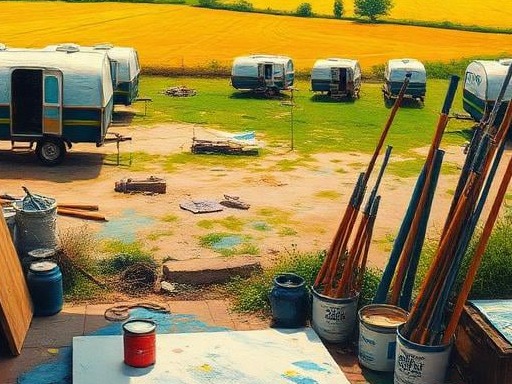
Painting stall

"The visual shown does not correspond to a real photo; it is simply meant to illustrate the story detailed below"


At this stage of the research, I can envision Billy Butlin looking at his stall and what his dreams for the future might have been, completely unaware of the fact that this very Hoop-la stall was the start of a powerful legacy. With the help of his uncles, Billy Butlin purchased the hoop-la stall for thirty shillings, which required some work as it was second-hand, including a weathered canvas. With the backing of his family, they helped to give this small hoop-la stall a fresh coat of paint and any repairs that it required as Billy Butlin set out on his final plan to become a showman. The stall was painted in blue and yellow, which is what he used later on when he opened his holiday camp in Skegness. The only obstacle he had to navigate was the prizes, referred to as "Swag," a term used by showmen. Fortunately for Billy Butlin, his family was able to assist him with some items on the condition that he would repay them from his earnings.
Family Tree

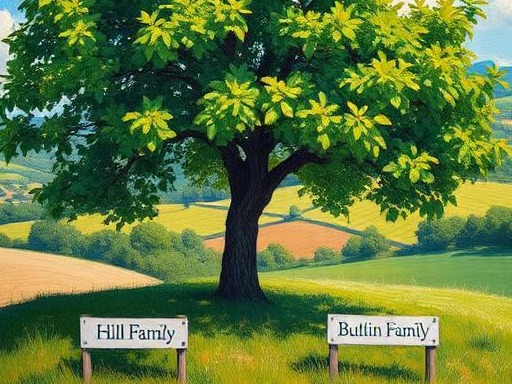
Please be aware: These details, shared in this area of the website,  should be treated as unofficial. If you are interested in conducting your own research, I suggest you check out www.familysearch.org, where I located the information.

Billy Butlin's Uncles and Aunties - In loving memory

Concerning this portion of the story, I would like to pay tribute to Billy Butlin's uncles, aunts, and grandparents, who were important in his history and the story of Butlins.

Uncle: Clifton Howard Hill, born 1866
Auntie: Jessica Amanda Hill, born 1870
Uncle: Ernest Granville Hill, born 1873
Mother: Bertha Cassandra Hill, born 1878
Uncle: Edmund Bernard Hill, born 1881
Auntie: Lottie Hill, born 1883
Auntie: Millicent Bernice Hill, born 1886
Uncle: Marshall G Hill, born 1866

Grandad: Edmund Hill, born 1844
Grandmother: Anne Eliza Hill (Griffin), born 1843

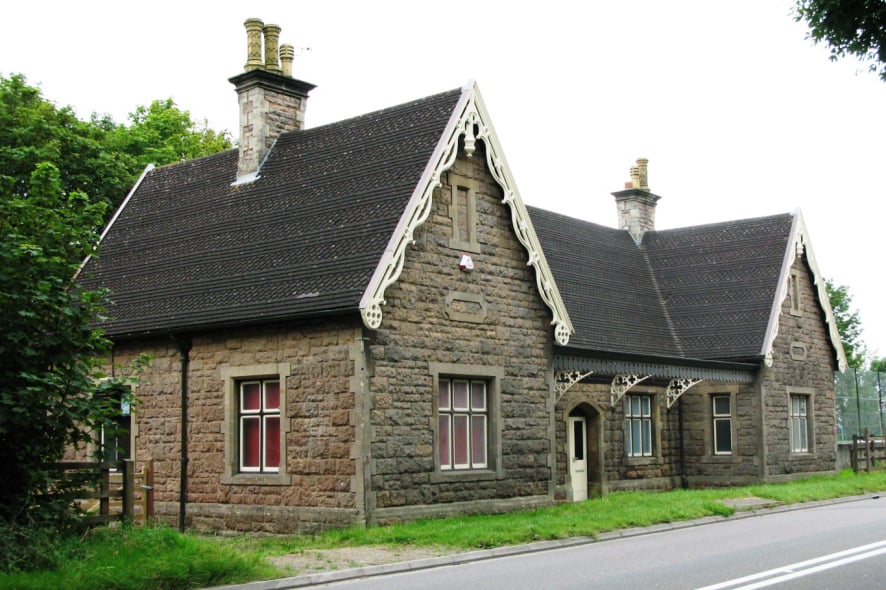
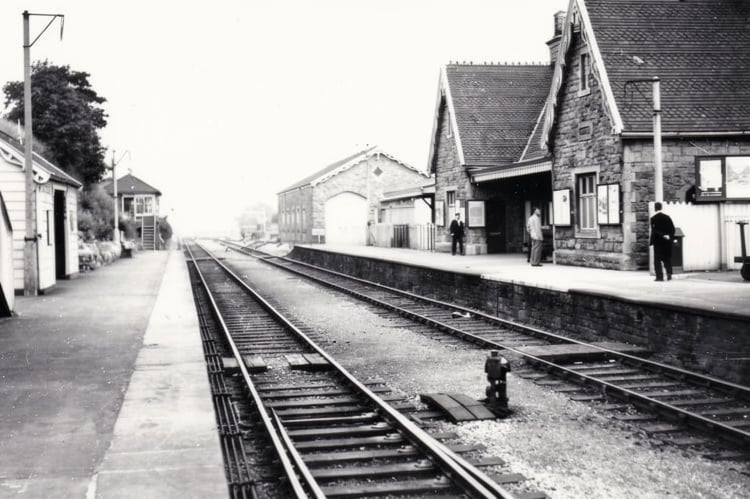
Axbridge Station

"Postcard photo of Axbridge Railway Station"

The hoopla stall was set up and showcased a fresh, new coat of paint, with Billy Butlin making it portable to make it easier to move from one place to another. He loaded his blocks and rings, along with other items, into a wicker hamper and started his journey to Axbridge for his first fair, known as the time to be called "Axbridge Lady Day Fair", a key location that became a legend in the Butlins story. As he boarded the train, I can picture Billy Butlin wondering and planning about what this chapter of his adventure would be like and if everything would function as planned. This was an extremely important moment for Billy Butlin, as he recognised that this had to succeed for his plans and dreams to flourish. After arriving at Axbridge station, he got off and made his way to the Axbridge fair, which was a two-day event on both Friday and Saturday. 

Axbridge Station - some basic history of an historic location

I wanted to know what the journey would have been like for Sir Billy Butlin during this important time in the Butlin's timeline. The station that Billy Butlin would arrive at is shown in this photo. It was a part of the Bristol and Exeter Railway's Cheddar Valley Line. The station had two platforms and would later become a part of the Western Region of British Railways (1948). Sadly, the station was closed down in September 1963, and the railway came to an end. However, the good news is that the station remains today as a youth centre, but for me, it's the fact that Billy Butlin would have been here in the very early days that makes it remarkable. (For further information about this station, please click on these words). Just to think that today, this historic building helps with being a youth centre, but back in 1921, it was the location that Billy Butlin would get off to start a legacy...that he did not know was coming to the United Kingdom. 

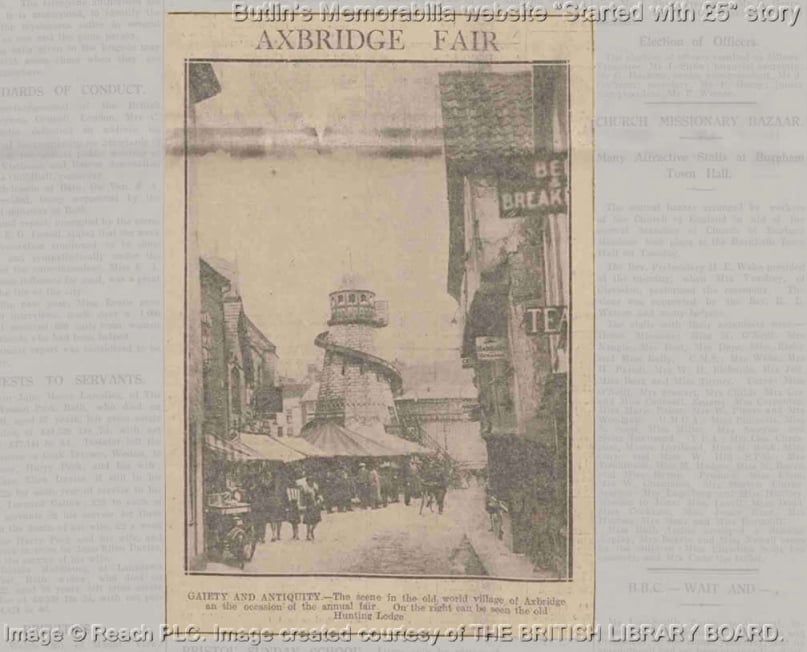
Axbridge Fair

Western Daily Press - Wednesday 26 March 1930 - Found on the British Newspaper Archive website - Link

"Mark's Notes: Searching for advertisements related to the Axbridge fair in 1921 was quite difficult, but I managed to find this lovely one from 1930. This newspaper article is important because it features a key funfair attraction that we see would be included at Butlins. The stunning photo also displays the stalls on the left side, giving us a glimpse of what it might have been like when Billy Butlin came in 1921."

When Billy Butlin arrived at the site of the Axbridge Lady Day fair, he would start preparing his new stall for the customers. His Hoop-la stall offered five rings for two pence, which involved throwing the ring over the prize and block to win. However, a mistake made by Billy Butlin during that time became one of the legendary stories in the history of Butlin's. On page 63 of his book, Billy Butlin reveals that the legendary tale of the blocks being smaller is only partly true, as it was indeed a mistake he made. He explains that in his attempt to economise, he made the blocks smaller to ease transportation from site to site, but the measurements he took were incorrect, leading to them being smaller.

This error turned into a success for him, as the chapter titled "Small profits and quick returns" became a "cornerstone of his success" (his own words). By reducing the size of the blocks, customers found it much easier to win prizes, which also resulted in more customers coming to try their luck with the hoops. Billy Butlin recounts that on the fair's opening day, all his prizes were claimed, costing him a total of £10. The silver lining for Billy Butlin was that although this mistake might have cost him £10 worth of prizes, it also generated £20 in revenue. The error made by Billy Butlin quickly became known among other stallholders, who had made their stalls significantly more difficult to win from. Some of these stallholders displayed their prizes for months before they were finally won, and Billy's loss of all his prizes on the first day puzzled them.

The key difference between them is that their earnings were between £5 and £6, whereas Billy Butlin's stall generated £20 for the same night. Even after accounting for the cost of the prizes, he was still earning more on that one night than the other stall holders, which provided Billy Butlin with an important learning experience in the world of showmanship and business management. It was during this time that he would often tell others about the importance of 'small profits and quick returns,' a lesson that remained with him until his passing. The problem Billy Butlin encountered was that there was a second day of the fair, and he had no 'swag' left, which was an important issue since his stall relied on it for success. However, embodying the spirit of the travelling showman, he managed to obtain some prizes from other stall holders on the condition that he would repay them. In no time, Billy Butlin had everything he needed as the second day of the fair arrived, having made a good profit again with all the prizes being claimed, helping him finish part 1 of stage three of his plan from his journey from Canada.

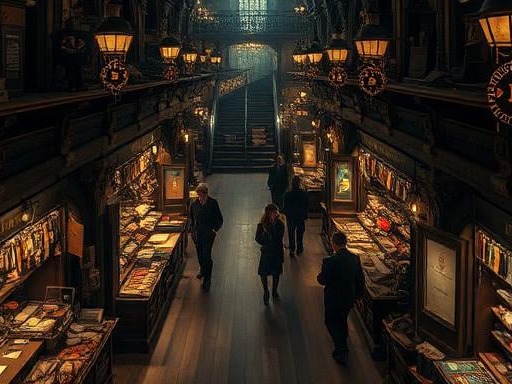
Swag Merchants - Houndsditch

"The visual shown does not correspond to a real photo; it is simply meant to illustrate the story detailed below"

The second stall was a success as Billy Butlin promptly got ready for his next event in Yeovil. However, he needed to be more organised regarding where to acquire the swag items and knew that the best place to find them was in a location called Houndsditch in London. In Houndsditch, there was a lane where many merchants sold swag items, such as salt and pepper pots for sixpence, watches for 1s 3d, and the pricier ones at 2s 6d, along with alarm clocks costing a few shillings. After the long journey from Bristol to London, Billy Butlin would start the second part of his three-part plan to launch his showman career. While talking to many merchants, he found it difficult to gain someone's trust for credit, which he believed was due to his mixed West Country and Canadian accent. Not many people were sure if they could believe in what he was planning. 

Still, propelled by his determination, Billy Butlin found himself at a merchant named Alfred Myers. Alfred was receptive to listening to Billy Butlin's proposals as they talked about Billy's dreams and how he asked for the swag to be given on credit. A deal was reached that required Billy Butlin to make a down payment in exchange for £50 worth of swag, which was exactly what he required. The arrangement was finalised, and Billy planned to pick up the items the next morning. The challenge for Billy was to find accommodation for the night, but there was a complication; with the agreement made with Mr Myers, he did not have enough money for a hotel. In his book on page 64, Billy mentions that it was a mild spring night, and he decided to curl up on a bench in St James Park, where he got sufficient sleep, but does not recommend this as an option.

The following day, Billy Butlin would gather his belongings and head back to the West Country to reunite with his family and the travelling showmen. With everything arranged, Billy would accompany them to start the first part of their tour, which was referred to as the circuit. The first stop was the Yeovil fair, followed by the Exeter Fair, and the final destination for this segment was the Easter Fair at St Thomas, located in Haven Banks, Exeter (source). An interesting detail from the source I included is that she recalls once managing a Hoopla stall. After completing the first circuit, Billy would proceed to the second phase of the tour, which encompassed Hereford, Ludlow, Leominster, Craven Arms, and various other small towns.

A considerable amount was learned during the year 1921 as the tour wrapped up, with Billy Butlin acquiring extensive knowledge from his stall. He learned what was required to move from site to site, how to arrange the necessary supplies, and how a mistake with his blocks ended up being the right choice. However, there was a negative aspect to the year: the persistent debt owed to the person who took a chance on him, Mr Alfred Myers. Billy always settled his debts, but he understood the importance of being more profitable rather than relying on credit. His business methods proved effective, and his credit would grow, allowing him to obtain more. Still, he felt it would be far better to pay for what he needed rather than depend on credit.

Reflecting on his accomplishments over the past year, he notes on page 65 in his book that an important part was securing a place to stay for the night. It was widely recognised that failing to arrange your accommodation in advance would likely result in landladies refusing to offer you a room, given the conditions associated with the fairground work. From all he learned, Billy Butlin would finish his three-part journey from Canada to the United Kingdom. However, there was more in store as his new challenge for the coming year was to turn the credit into cash for buying the merchandise with the profits he had made. Furthermore, there was an additional story from his stall in Ludlow and how it transformed into something that Billy would greatly value.

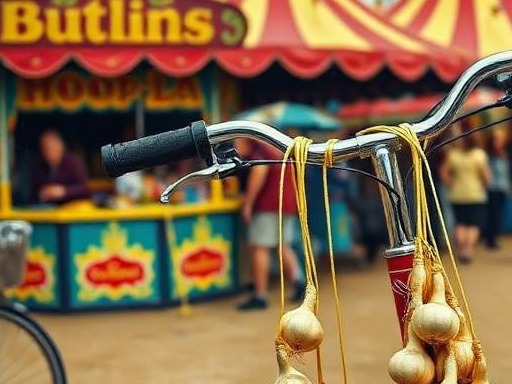
Joe Romaine - Onion Seller

"The visual shown does not correspond to a real photo; it is simply meant to illustrate the story detailed below - fan made logo not official"

During his stay at Ludlow, Billy Butlin would return to his hotel room, eagerly anticipating the comfort of his double bed after a long workday. Upon his arrival, he opened the door and was taken aback to find another person already occupying his bed. As he approached, he realised it was a man fast asleep, leaving him uncertain about how to proceed. Feeling exhausted, he opted for the simpler solution of climbing into the bed on the opposite side and deciding to address the situation the next day. Billy Butlin was not prepared for confrontation and figured it was preferable to be in bed rather than on the floor.

The next day, Billy got up after a well-earned night’s sleep and introduced himself to the gentleman who was sharing the room with him. The gentleman was an Italian man named Joe Romaine, who made a living selling onions and would cycle from town to town with his onions on a bike. A fascinating detail in this story is that Sir Billy Butlin notes on page 65 that Joe would become one of his best friends and one of the first tenants in his amusement park at Bognor Regis. Like Billy Butlin, Joe would also become a showman, abandoning his onion-selling profession. 

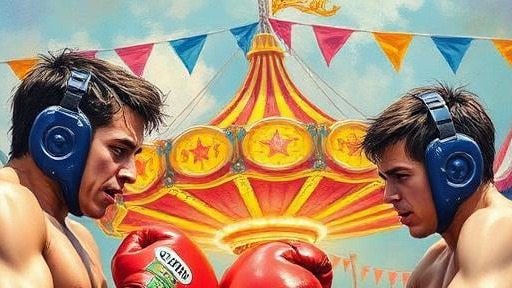
Boxing

"The visual shown does not correspond to a real stall; it is simply meant to illustrate the story detailed below"

As I continue my research into the history of Butlins, I came across a section where Billy Butlin mentions that the travelling showmen were viewed as "roving vagabonds." This term was used during that era to describe individuals who travelled from one location to another without a permanent residence. I found this quite interesting, especially since we previously learned that all the travelling showmen would arrive at Dorney Yard, but I understood his view. With the season coming to a close, the showmen would seek ways to earn some extra income, often through boxing. Some notable names from this time included a showman named Johnny Grattan, who became the West Country Champion, and Frankham, who was the half-brother of Joe Beckett, the British Heavyweight Champion.

This event was also included in fairs where fighters could enrol at the boxing booth and be among the spectators, ready to take on the challenge from the boxer. The fee for participation was either 10s or £1 for two to three rounds, each lasting three minutes. The organiser of this event was a showman named Sam McKeon, who functioned as both the timekeeper and referee, which worked perfectly for the occasion. Sam was in charge of ensuring that the fight went according to the rules and that physical damage was kept to a minimum. However, there were instances when no one was willing to take the chance, and that was when the spirit of the showman came alive, as they would act as if he were part of the crowd and accept the challenge, providing everyone with the entertainment they desired from the show.

It is interesting to note that Billy Butlin had also become one of the showmen who would rise to the occasion and accept a challenge, with Sam making sure that the challenger was similar in build and height. This boxing match provided Billy Butlin with an important lesson as he gained insights into defence in the event of a negative occurrence, and more into the world of showmen, with all they offer to the customers who come to the fairs. While the showmen typically looked out for each other, there are moments when one may be left to fend for themselves, and something adverse could happen. Each showman would have an understanding of the need to protect themselves and the items they own. 

One night at a fair in Bristol, Avonmouth, Billy recalls two drunken men who approached his stall just as he was closing up. They insisted to Billy that he was not closing and that they wanted to win a prize. Billy Butlin told them he was closed and advised them to come back tomorrow, but they warned him that if he did not let them play, they would make sure there would be no stalls open for the next day. Billy, not wanting to take any chances with the two large Irish seamen, gave them five rings each, saying, "That will be a two-pence charge." The men laughed and responded, "We will owe it." The two then climbed over and placed the rings over the blocks, demanding their prizes in a very loud voice.

Billy was fortunate that another showman was nearby and could see he was in need of help. As he approached from the back, he indicated to Billy to keep them distracted. Upon getting closer, he struck both men with a rubber hose, causing them to fall to the ground. This individual was Jack Harvey, who came from London, and with the assistance of other showmen, they carried the two men to the gate and threw them outside, splashing them with a couple of buckets of water to wake them up. Billy refers to Jack as his saviour (page 67), highlighting that showmen always look out for one another to ensure that everyone remains safe at all times.

Another story revolves around the Hoop-la stall, where Billy Butlin shares an amusing incident involving a sailor who had a bit too much to drink one night. Seeing Billy's stall, he thought it would be the ideal place for a nap, so he climbed over and settled down among the prizes. Billy tried to wake him, but the sailor was fast asleep and began to snore while lying across the table. True to his character, Billy decided to let the sailor continue sleeping and made slight adjustments to the layout so that customers could keep playing his game. What Billy didn't foresee was that the presence of the sleeping sailor would actually improve his profits, as many people started to spread the word about the amusing situation. A number of curious onlookers came to try their luck at his stall, laughing about the incident, which soon became a legend. There were moments when other sailors approached to check if the man was one of their own, but Billy Butlin remained undisturbed and continued his work. The sailor must have been quite tired, as he remained asleep until closing time, when Billy and his fellow showmen gently moved him to a comfortable spot under one of the wagons as they finished up for the night. The sailor was absent the following morning, but the tale had already turned into a legend.

Each day as a showman, Billy Butlin learned the significance of being transparent about what he offers and how it is presented. A prime example is the story of those who were not well-liked at the fairs, known as "windbag merchants." These individuals would come to the fair to counter the showmen's methods, such as by convincing attendees to buy an envelope that was said to contain a prize, including a brand-new watch. The only person in the audience who won the watch was an insider, while the rest received items of minimal worth. The showmen, in contrast, believed in giving customers a fair chance, and I found it fascinating that he highlights this, as it is a principle he applies to the holiday camps and hotels. 

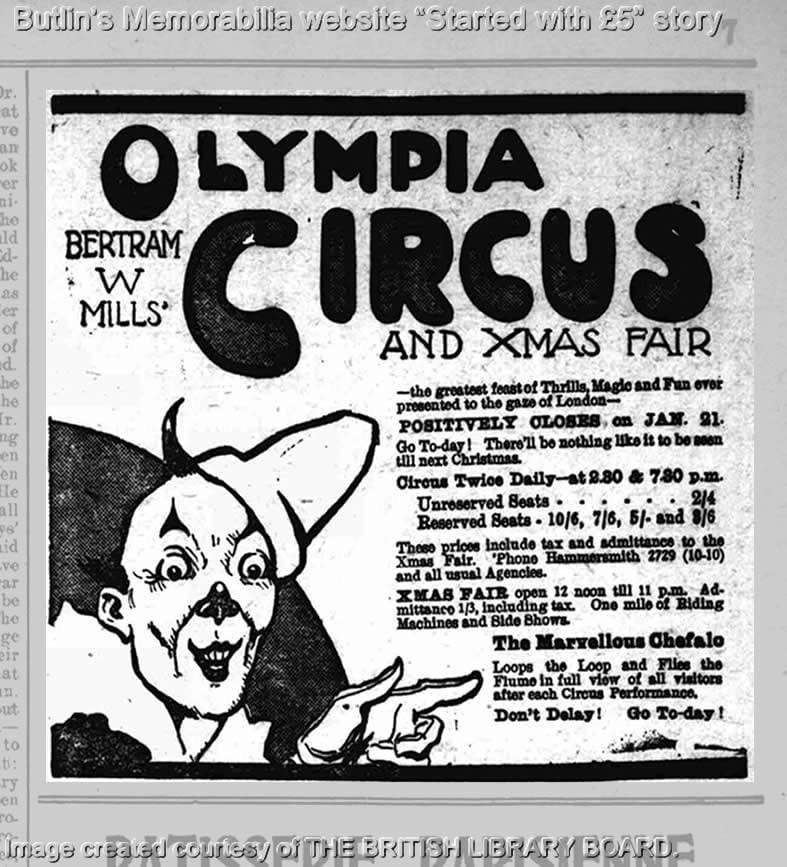
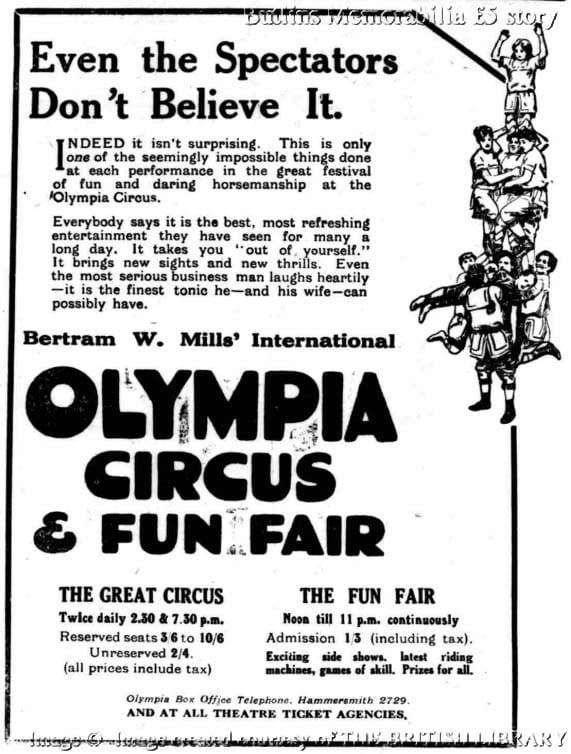
By 1921, Billy Butlin had reached an income of about £25 per week and was enjoying the perks of the showman lifestyle. However, he encountered a challenge as his earnings were not enough to support him during the winter seasons, prompting the need for a change to advance his career. A new plan was crafted, focusing on expanding his business and getting enough money for his mother's return to England from Canada. While looking for work, Billy came across news of an event at London Olympia called the Bertram Mills Christmas circus. After discussing with other showmen, he learned that the circus allowed stalls to be set up nearby, which provided Billy with a significant opportunity.

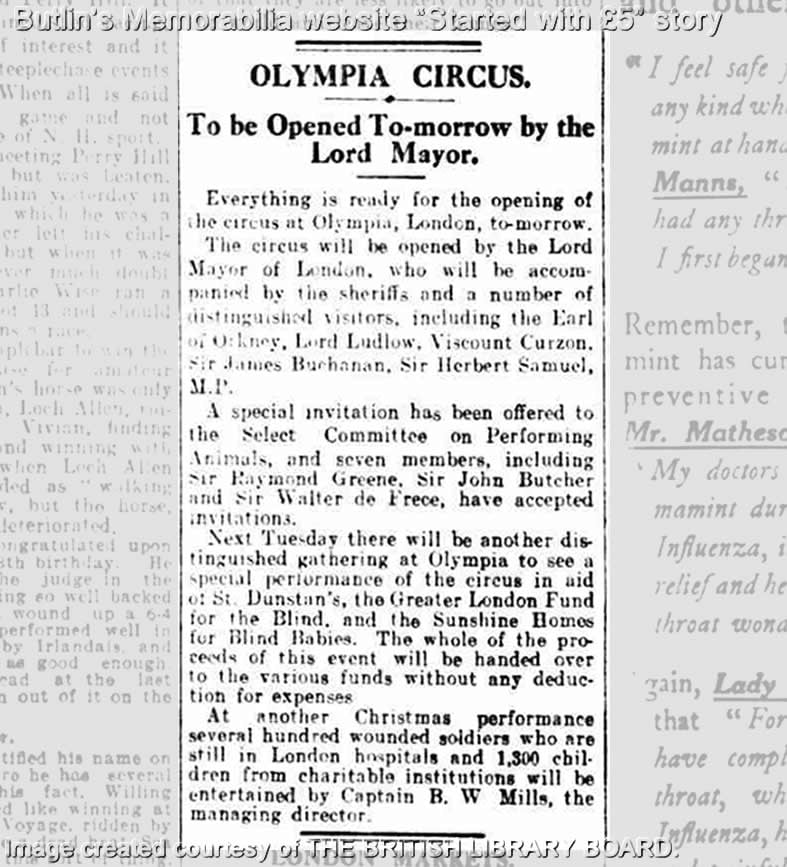
Olympia Circus

Daily News (London) - Thursday 15 December 1921 - Found on the British Newspaper Archive website - Link

Wanting to explore this opportunity further, Billy Butlin travelled to London to experience the circus and everything it had to offer. Upon arriving at Olympia, Billy began walking around the stall area to identify potential opportunities. Observing the line leading to the Big Top circus, Billy noticed the absence of stalls facing the queue, and with so many customers waiting, he recognised a significant opportunity to set up a stall and generate some income, something he could envision happening at this event. Billy Butlin held Bertham Mills in high regard and shared how it was the largest winter circus in Britain at that time. The story of Bertham Mills closely mirrored Billy Butlin's own journey, having started from humble beginnings to achieve success in the circus industry. 

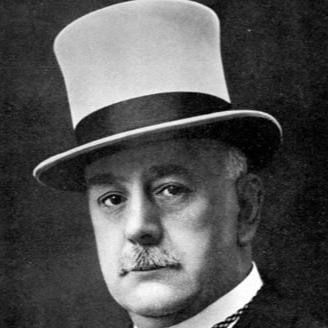
Bertram Mills

Credit for photo - website link

Bertram Mills - Basic history

Born in August 1873, Bertram Mills was the offspring of Halford Mills, an undertaker and proprietor of the Reformed Funeral Company. Bertram participated in the family business by helping with the driving and cleaning of coaches. During World War I, he was part of the Royal Army Medical Corps, where he rose to the rank of Captain. Following the war, Bertram Mills became intrigued by the Wilkins and Young Circus. This interest prompted him to bet a friend that he could create a circus as impressive as the Wilkins and Young, which he aimed to establish within a year, called "Bertram Mills' International Circus."

You can read more about Bertram Mill as the website called Circopedia, click on this link

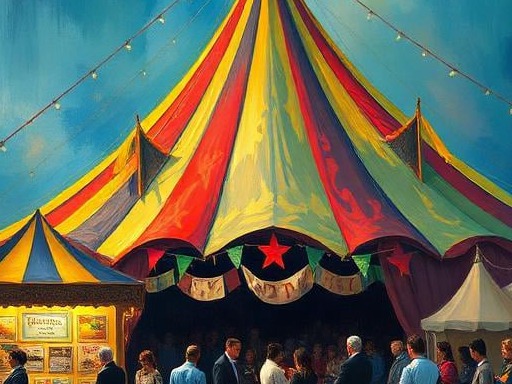
Circus at Butlins

Credit for photo - website link

Big Top Circus at Butlins

Butlins continues to celebrate this connection to history by offering the Big Top Circus at the resorts on special days. The circus is very entertaining and a great deal of fun. 

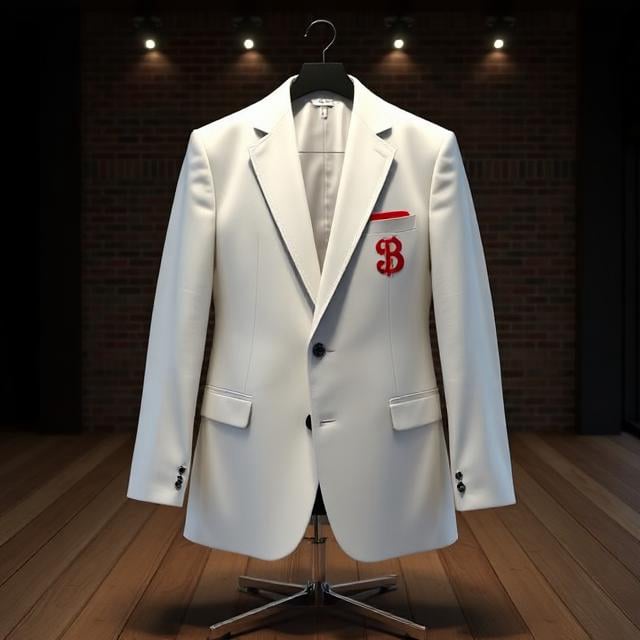
First Butlins Uniform (image is illustration, not official)

The first Butlin's uniform was a white coat with the letter B on the breast pocket - the photo shown is only an illustration and not the official photo (I have no photo of the first uniform)

Having completed his research, Billy Butlin was ready to review how much he would need, what was required for prizes, as the customers here are different from those he encountered at the fairs, and whom to approach to get this organised. With this new and exciting business expansion, Billy Butlin decided that he needed to double his profits to make this venture work well for him and to secure that stall at the circus event. There was much to be done to ensure that Billy Butlin could set up his stall where he wanted and at the correct time of year, and as with all his projects, not much stood in his way.

The year 1922 was a crucial period when Billy Butlin employed his first worker, Mr Tom Bridgwater, who was just seventeen and lived in a nearby town. Tom earned £1 per week and was tasked with operating the second stall that Billy had set up. However, there was a minor issue: he needed transportation for this business expansion. To resolve this, Billy Butlin purchased an ex-American Army four-wheel drive lorry for £50. This was an important moment in history, as Billy had never driven anything like it before, and the truck was in poor condition. In line with the Butlins story, this truck proved to be a small blessing, as it allowed Billy to gain knowledge about vehicle mechanics, which in turn enabled him to repair his own vehicles and save additional money. This was particularly important because, in a few years, Billy Butlin would go on to buy five more similar lorries, all of which he could repair with ease.

This year continued to be very important in the Butlin's timeline, as Billy Butlin introduced goldfish as prizes and also proposed an idea that no other showman had thought of. The dress code for the stalls was typically everyday work clothes, which is an area that Billy did support. However, Billy Butlin wanted to make a change to this tradition with his stalls by launching the first-ever Butlin's uniform. The first Butlins uniform was worn by Billy and Tom Bridgman, featuring a white coat with an embroidered letter B on the breast pocket. Billy wanted both stalls to be well-organised and convey a sense of efficiency. Another modification included replacing the poles on the stalls with box pillars and changing the colour scheme to red and white, which increased the workload during construction, but ultimately proved an improvement for his profits, as many customers were attracted to what he was offering. 

In 1922, Billy Butlin was experiencing great success, enjoying his life as a showman and had no plans to return to Canada, even though he had considered visiting his mother, Bertha. With the additional income from the second stall run by Tom Bridgwater, Billy had enough money to ensure the stall's success at the Bertram Hill circus. At the season's end, he would return to London to secure that essential spot. After making some inquiries, Billy Butlin spoke with Mr Bertram Mills' secretary, Miss Agnes Moore, who was responsible for allocating sites for the circus each year during August. He paid £40 for an eighteen-foot diameter stall for a six-week run at the circus, with the condition that it be in the position he found in 1921. Although Miss Agnes Moore was puzzled by Billy's specific location request, she thought there was no harm in granting it. This small permission was something he would never forget, as it was a significant moment in the timeline of Butlins.

Olympia Circus  - Bertram W Mills

Richmond Herald - Saturday 14 January 1922 - Found on the British Newspaper Archive website - Link

The other country showman failed to understand why Billy Butlin was travelling to Olympia, assuming he had become a "cropper," a term meaning someone likely to fail in their project. As the only travelling showman at the fair, Billy Butlin was filled with confidence that he would achieve his goals and felt it necessary to demonstrate this to the other showmen, including those from seaside resorts who were also present at the Olympia Circus. To enhance his understanding of the customers in the area, Billy Butlin had done some research by asking other stallholders for advice on what the customers would expect from the stalls. He found that attracting customers in this region would prove to be significantly more challenging than it had been at the showmen fairs. Billy Butlin knew that he had to change the way he did his stalls to make them work well for this special event. 

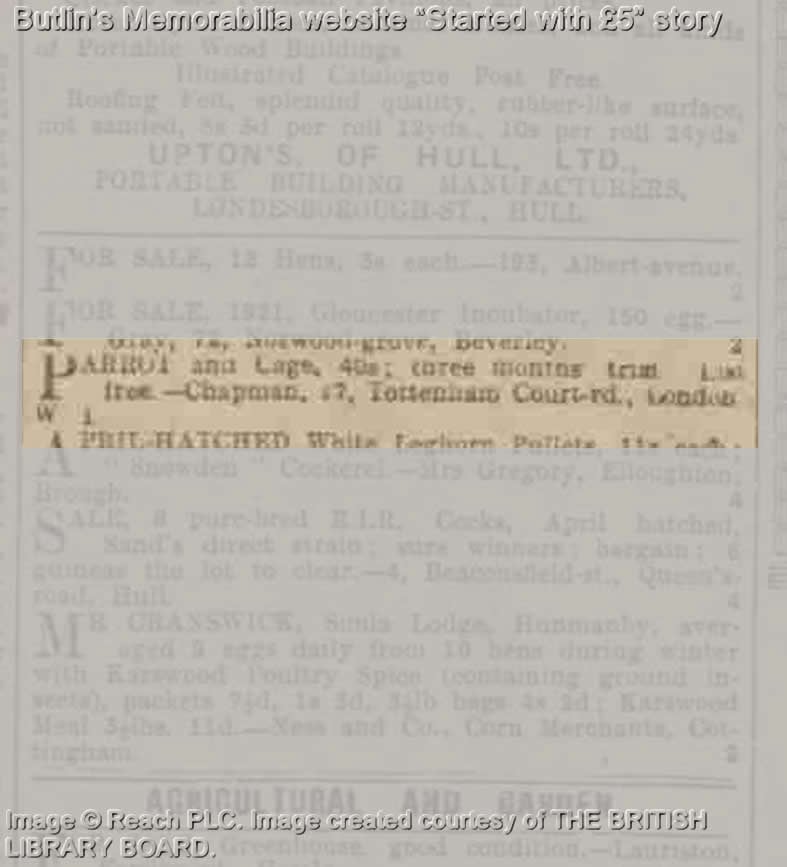
Chapmans Shop - Pet Shop

Hull Daily Mail - Monday 02 October 1922 - Found on the British Newspaper Archive website - Link

With his stall plans now in progress, Billy Butlin made his way to a store called Chapmans, situated on Tottenham Court Road in London. The advertisement I found above shows that Chapmans was a pet shop and played a crucial role in the Butlin story. It was here that Billy Butlin remembered being fascinated by the beautiful budgerigars he saw in the shop window. This shop sparked the idea for Billy Butlin to change the prizes at his stalls, as he observed that the budgerigars were always in pairs, which could attract couples to his stall. After discussing with the shop owner, Billy Butlin felt confident that this was the right choice for his stall, purchasing one hundred of these birds at the price of two shillings each.

With all these birds whistling away, Billy Butlin chose to change the layout of the stall to now feature a large round cage to display these beautiful birds. This idea made Billy Butlin feel he was moving in the right direction for his stall's success and that these amazing birds would help attract more customers. On the open day, Billy Butlin idea was highly effective, drawing many customers to his stall, with many winning the birds he had available as prizes. As the stall flourished, Billy Butlin felt a growing urge to do more and began to think of new ways to adapt his stall to increase his profits.

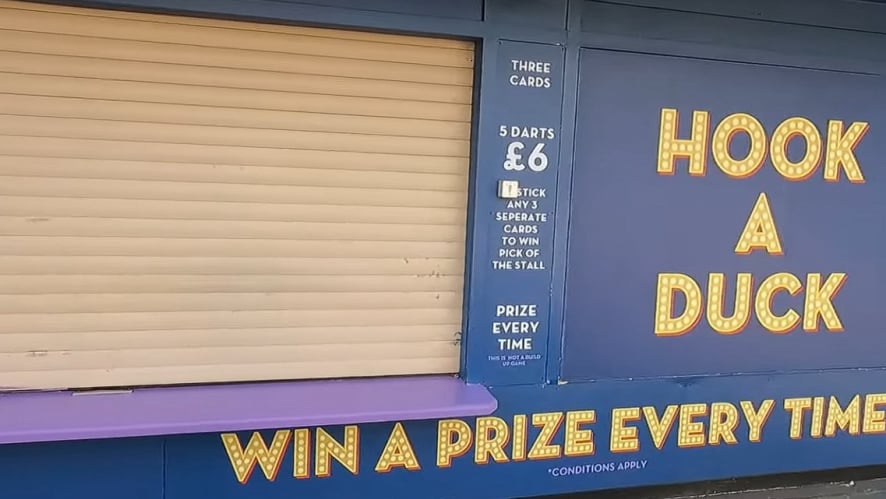
Stalls at Butlins

The game explained below is still in Butlins today (as of 2026), where it's remembered in the Butlin story

With the stall performing exceptionally well, Billy Butlin chose to adjust the layout to feature a new game that enabled customers to win prizes. The idea was easy to understand, with customers throwing a ball into a bowl to win a prize. The bowls were of various colours, with each bowl offering a distinct prize each time.

  • The Green bowl - You would receive a small box of chocolates
  • The Blue bowl - You would receive a large box of chocolates
  • The Yellow bowl - This was the best one to get, as you would receive a lucky little lovebird

Billy Butlin's plans proved to be quite successful, as he recalls earning over £200 in profit, an impressive amount of money in the 1920s. On page 73, Billy Butlin notes,  " a small fortune to a young man who would otherwise have been marooned in Dorney's Yard eating into his meagre savings".  This important event in London marked another moment in the Butlin's timeline, as Billy Butlin would alter the way he showcased his stalls. The reason for this change was that Billy had learned an extremely important lesson: it is always beneficial to study the behaviour of the customers in that area, as not everyone is the same. This vital lesson would become an extremely important aspect of his future business decisions and its significance in the Butlin timeline.

Billy Butlin confesses that he must have been one of the reasons behind the increase in the number of Little Love birds as pets, as he believes he gave away over a million of them during his time at the stalls (throughout the years). This moment was an important turning point in his personal journey, with Billy Butlin admitting to enjoying the experience of watching and finding the birds to be fascinating. In the Butlin's holiday camps, there was a Budgie club that was closely tied to this part of the Butlin story. He was known to have many birds as pets at his Windlesham Lodge and also when he retired to Jersey, where he kept peacocks and twelve hundred budgies of various colours.

In the true spirit of Billy Butlin, he recalls times when a customer would win the budgie and take it away in a small cage. There were instances when the cage might have been opened when it shouldn't have been. The budgie would fly away but would return to the cage at Billy Butlin's stall, which he allowed back into the featured cage. When the family returned, he could see the children were upset. Each time, Billy Butlin would return the budgie to them, bringing back their happy smiles. The Butlin stalls were doing very well, with the help of Tom Bridgman and, of course, the founder of Butlins, Sir Billy Butlin, and the additional areas, such as uniforms and better prizes, would work well for what this young showman was looking to achieve. 

Richmond Herald - Saturday 05 January 1924

Richmond Herald - Saturday 05 January 1924 - Found on the British Newspaper Archive website - Link

In 1924, Billy Butlin was doing exceptionally well and achieving his ambitions, yet he was always open to exploring new ideas. As he walked down a lane in Shoreditch, he noticed a large number of dogs. These dogs were wonderful to see, as he observed many people admiring them and chatting with each other, showcasing the remarkable effect a puppy and dog can have. This led Billy to think about his stall and how this opportunity could be good for his business. The more he witnessed these joyful moments, the more he realised that offering a puppy as a prize at one of his stalls could direct his business in a new direction. Billy Butlin made the decision that this would be the next stage of his plan, purchasing twenty puppies to use as prizes at his stall to enhance customer turnout.

The following day, Billy Butlin would open his Olympia stall ready for a new day. He decided to add more yellow bowls to increase the likelihood of customers winning the grand prize and to give people the feeling that there was a higher chance of winning. This strategy proved to be quite effective, and by the end of the first day, he had seen ten puppies being won. Billy Butlin viewed this as a chance for free promotion and a way to modernise his stall. However, this amazing success brought about an unexpected problem. The owner of the circus, Mr Bertham Mills, approached his stall, visibly displeased with the situation. "Get these bloody things out of here," he exclaimed, evoking memories of being called to the headmaster's office in Billy's mind.

Mr Bertham Mills was not particularly happy about the presence of the puppies, as he was starting to receive complaints from certain customers, who were very unhappy with them. The explanation for this is rather simple: the puppies were untrained and did not know how to behave, which is how a puppy should be in the very early days. This situation caused the puppies to misbehave with some customers' fur coats, which were a popular fashion in the 1920s. Billy Butlin remembers a time when two ladies approached him to express their dissatisfaction, saying, "The puppies are not trained for fur coats." Unhappy with his customers being unhappy,  Mr Bertham Mills ordered him to take the puppies away from the stall, and in light of the complaints, Billy Butlin followed through with the request.

Some of the puppies that were won were returned to him, as Billy Butlin looked for a solution to his problem. The main issue is that when you offer the puppies for free to those in the area, people tend to feel there must be a hidden catch. After all, no one gives anything away for free, so not many individuals would accept the offer that Billy Butlin had for them. While standing around, he often mentioned that the puppies were free of charge, yet no one was willing to take him up on the offer. With nowhere for the puppies to go, Billy Butlin decided to take them to the Battersea Dogs Home, knowing they would be well cared for and would eventually find new homes. This experience served as an important lesson for Billy Butlin, leading him to conclude that while his intentions were good, the location was not the correct one.

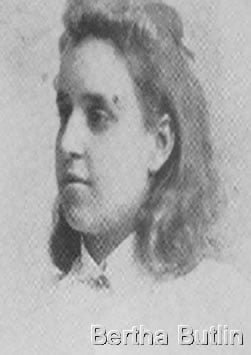
Bertha Butlin

"In loving memory of Bertha Butlin (married name Robotham in 1924)"

With his puppy problem now solved, Billy Butlin would carry on his work to ensure that his stall was bringing joy to his customers through winning prizes. The damage of the puppies was minor, and with Billy Butlin doing as asked, everything would return to how it was. By the end of the 1924 season, Billy Butlin was extremely delighted to find that he had enough funds to buy a plane ticket for his mother to return to the United Kingdom. Bertha and Billy Butlin were extremely close, and the feeling of wanting his mother to return to the United Kingdom was always one of his goals, but at the time, it was the money that restricted him. Now with the means to purchase what was needed, Billy Butlin was able to reunite with his mother, something he was very excited about. 

Bertha Butlin would return to the United Kingdom, where she would see her son once again, and it must have been overwhelming for both of them. I can imagine she felt extremely proud of her son and was eager to learn everything that had happened since he left Canada in 1921. I can picture Billy explaining everything to his mother about his journey back to the UK, the first stall in Axbridge, and how he has continued to expand his business to achieve greater success. As I write this, I sense that Bertha would have been incredibly proud to hear it all, and it must have been wonderful for her to see her son showing a great deal of confidence in his ideas. For Billy, the most important reward was simply having his mother with him in that moment.

Bertha had always been dedicated to supporting her son in achieving his dreams, and she decided to assist him with the stalls. This was music to his ears, as his mother had a wealth of experience with showman fairs. Billy Butlin would purchase a deluxe caravan for £600 and use his ex-army truck to move it around while they managed the stalls. Life was enjoyable for Billy Butlin after all his hard work, until he encountered a minor issue with the caravan. Unfortunately, it crashed into a ditch, making the caravan irreparable and providing Billy with another important lesson. He had always been advised by other showmen to get insurance, but he had never considered it seriously until that fateful day.

Walsall Observer - Saturday 04 June 1927

Walsall Observer - Saturday 04 June 1927 - Found on the British Newspaper Archive website - Link

In the course of Billy Butlin's story, there were indeed moments that became quite challenging for him. A crucial moment in the history of Butlins changed the way Billy Butlin would deliver his stalls, having an important impact on his future. The problem was related to the riding masters, who were the principal figures at the fairs, much like the bosses who organised everything. To be allowed a position for your stall at these fairs, it was necessary to be a member of the showman guilds and to follow the rules set by the riding masters. The difficulty for Billy Butlin was that he was not very good at taking orders from anyone, with the exception of his military service. He understood that his ego was not a priority and that there were times you needed to do what was requested. 

The riding masters were not bad individuals; they were business families that understood how they wanted their fairs to be done. There were several important groups that organised the large fairs, one example being the Collins family, led by Pat Collins, who later became a Member of Parliament (you can read more about Pat Collins on Wikipedia; here is the link for you). The challenge was that stall holders, including Billy Butlin, felt that the riding masters were giving them an unfair deal, with some wanting to charge rent for specific stall locations. This created difficulties for any stallholder trying to make a living from the stall at the fair. 

At times, Billy Butlin noticed that the rent requirements provided him with minimal returns, highlighting the need for change. By engaging with other stallholders, he learned that this concern was not solely his own. In 1924, he became the leader of the West of England Stallholders Association, where they worked together to tackle the issues previously mentioned. However, the choice to have him lead had resulted in negative consequences, as the association lasted only two to three months due to the withdrawal of other stallholders. This situation positioned Billy Butlin as the one to blame, as the ride masters complicated his efforts to find a suitable location for his stall. With all the good intentions of the association, Billy Butlin knew when to call it time with the group and knew that the ride masters were indeed too powerful at the time with the group he had. 

Bath Chronicle and Weekly Gazette - Saturday 11 July 1925

Bath Chronicle and Weekly Gazette - Saturday 11 July 1925- Found on the British Newspaper Archive website - Link

Struggling to remain at the larger fairs, Billy Butlin sought out alternative strategies to maintain his stall business. To make this feasible, he needed to find smaller fairs that were not controlled by the major players, enabling him to set up his stall. Billy Butlin located these smaller fairs, such as church fairs in the West Country, and found them to be more profitable than the larger ones he had attended before. This unexpected success led Billy to expand his stalls to the point where he was unable to secure enough ground, prompting him to look into other options.

This was a significant turning point in the history of Butlins, as Billy Butlin chose to finance his own fair with a small family circus that he would hire. This is an important milestone in the Butlin timeline and for Billy Butlin, who recalls getting up early to set up the fair and ensure everything was ready for customers to enjoy themselves. The setup included the circus and all the stalls he had planned for the location, resulting in great profits each time. It was also at this fair that another stall was introduced, named "The Spinner," which was essentially a large round circle marked with numbers. Customers would purchase a numbered ticket for threepence, hoping that their chosen number would win. A staff member would then spin the wheel until it stopped, with an arrow indicating the winning number to win a prize.

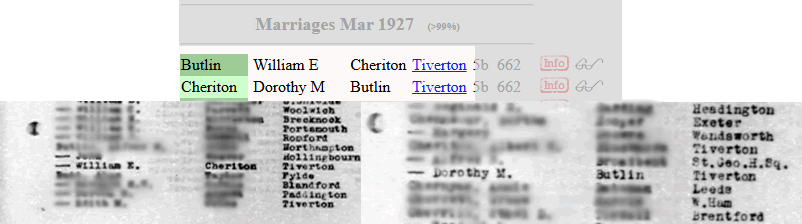
Marriage of Dorothy and Billy Butlin

Information was found using the FreeBMD website- Link

In 1924, the Spinner game held another important meaning for Billy Butlin, as he recalls during the Autumn fair in Tiverton, a brown-haired girl was standing nearby. This young lady chose not to buy any tickets but remained close. When things quieted down a bit, Billy Butlin would approach her for a brief conversation and discovered she was a delightful 'Devonshire Girl' with a lovely attitude, making it easy to engage with her. As their discussions continued, he learned her name was Dolly and that her parents owned a fish and chip shop. Dolly lived with her parents. Their relationship began to blossom, and when the fair relocated, Billy ensured he visited her every day, even if it meant travelling thirty miles. Billy Butlin referred to this lady as Dolly, but her full name was actually Dorothy Mable Cheriton. Dorothy was born sometime between 1898 and 1902 (click to understand the range of years). Her father was a gentleman named John Samuel Cheriton, who was married to a woman named Eliza Maude Stevens.

Butlin's Van

"This is an AI image to give us an idea of how the van could have looked. I have not found any image (yet) showing them"

Billy Butlin's mother, Bertha, played an essential role in assisting him with his stalls in Barry Island. Together, Dorothy and Billy dedicated themselves to hard work at the West Country fairgrounds. His aspiration of becoming a showman was at the level he wanted to be in, as he purchased a living wagon for himself and Dorothy. The growth of the stalls and fair was so successful that he was now financially capable of owning five lorries and employing a team of six staff members to manage his business. The phrase "Hurrah! It's Butlin's!" would be painted in gold on the sides of the vans, a brilliant choice made by Billy Butlin, as people would recognise the vans' arrival and be excited by the sight of his stalls or fairs. I can imagine Billy Butlin reflecting, "In the early 1920s, I decided to work alongside Norman Littlewood at that Toronto fair, and from that special moment, I understood where my life was meant to go. I travelled all the way to the United Kingdom with no money but still managed to reach Dorney's Yard. Then came the struggle to join the Showmen's Guild, with support from my Uncle Marshall. Finally, I boarded that train to Axbridge to launch that special stall, a small, second-hand unit that served me well. Now, I am in love, my mother is by my side, and I have vans displaying my name touring various areas... wow, what a story to share." These may not be his exact words, but that is how I perceive he might have viewed this situation.

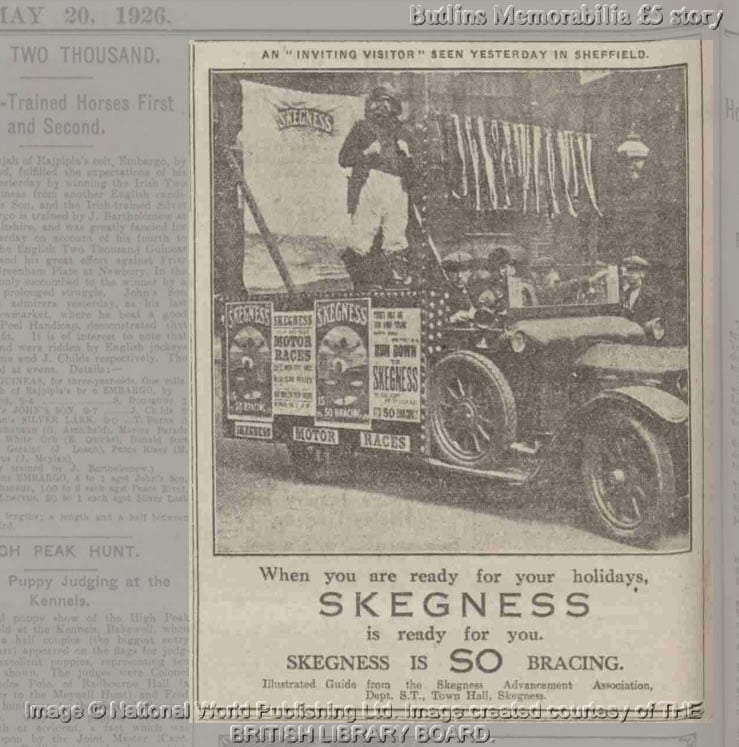
Sheffield Daily Telegraph - Thursday 20 May 1926

Sheffield Daily Telegraph - Thursday 20 May 1926 - Found on the British Newspaper Archive website - Link

As the story surrounding the stalls comes to an end, we identify two additional key moments that could influence Billy Butlin and present him with yet another challenge in his story. The sad news concerning his uncle Marshall's health was troubling him, and there was a leadership change within the showman guild. This could have had an effect on him as a member since he was not born in a caravan or on a showman's site (which was a requirement to be a member at the time). However, the concern would soon go away as the decision already made beforehand would remain in place and that Billy Butlin was still a member of the showmen's guild. 

The second very important part of the Butlin story is about a wealthy man named...

Albert Cronkshaw

In the 1926/27 season at the Olympia circus, Billy Butlin remembers regularly seeing Albert in one of the bars, where they would engage in discussions on various topics. One of the key subjects was the transformations occurring in fairs and stalls due to changing customer demands, which led Billy Butlin to reconsider how to ensure the continued growth of his business. Albert, who referred to himself as a "flattie," explained that he did not have the luxury of being raised as a showman. This conversation was very important to the Butlin story, as Albert revealed to Billy Butlin that there was a more promising location to start a business, where he could expand his ideas a great deal. Billy would ask more about this location with Mr Albert Cronkshaw telling him about a place called Skegness. Initially, Billy Butlin had never heard of Skegness and thought it might be in Scotland, but he soon discovered it was not, as he travelled there to learn more about it.

Of course... that's another part of the Butlins story, but here is where stall history comes to an end on the Butlins Memorabilia website. I do hope you like the research I have done and have found this part of the Butlins story to be interesting. 

Mark's thoughs

Mark's thoughts about this story

I have to admit, the deeper I explored the story of £5, the more excited I became about the findings I encountered. My initial discovery was that the history of the Axbridge railway station is important to me and for the Butlin story featured on this website.  This struck a chord because it was here that Sir Billy Butlin would have stepped off for the first time, signalling the start of the Butlins story in the United Kingdom. With little information (including both Billy Butlin and Rex North books), I learned that the first fair Billy Butlin attended was the Lady Day Fair in Axbridge, aided by articles from newspapers and insights from Billy Butlin himself. That fantastic photo of the Axbridge fair... well, it really brought everything together in a lovely way, I must say. I can only feel a profound sense of inspiration for a great person who has achieved so much to get to this point; wow, what a rewarding experience it is to research and discover more.

When I reached the section of his story about St James Park in London, I was initially taken aback to learn that this magnificent man would spend the night on a bench. However, upon reflection, it made perfect sense. Billy Butlin had journeyed all the way from Canada, riding the roads, hitching a ride on a cattle boat, and getting lifts from Liverpool to Bristol with hardly any money. Sleeping on a bench for the night no longer seemed surprising to me, as all the hard work he had put in up to that point made everything fall into place. He did what was necessary to ensure his future success; what a moment and a fantastic way to illustrate the story of Billy Butlin.

It was quite fascinating to observe that when Billy entered his hotel room and discovered someone else in his bed, he would merely glance at the situation and say, "Oh well, I am too tired for this." The following day, they would have a pleasant conversation and end up becoming the best of friends. This illustrates more about Sir Billy Butlin and his character in both his business and personal life. Most people would have been quite upset to find another individual in their bed, but Billy thought, "Too tired, I’ll handle this tomorrow." Interestingly, Billy found himself in a similar situation at Dorney Yard, which further highlights his showman-like attitude towards helping one another.

As I explored more about the stall, its importance became increasingly clear, particularly as we observed the essence of Billy Butlin beginning to emerge, a spirit that would eventually extend to the Holiday camps and hotels. If a drunken sailor were to climb over and declare, "Yep, that's the spot for me," it would likely lead many to call the police or feel the need to make a scene, but not Billy Butlin. He would respond with, "Oh well, it happens, let's keep going with it all," which reflects the same mindset found in the holiday camps and hotels. "Bad weather? Who cares, let's just keep moving!"

Upon further investigation into the life of this exceptional man, I learned that his path to success was marked by a considerable learning curve. The story illustrates how he came to understand the importance of researching the area to ensure his stalls operated more effectively, allowing him to improve the income required for business growth. The circus served as a significant turning point in his story, during which he recognised that ego was not a priority, and that seeking guidance and support from research was the way forward. This important event would influence Billy throughout his life and remains relevant in today's Butlin's, where adapting to modern needs is essential. I often use the phrase: "the needs of today do not align with the demands of tomorrow," which reflects the continuous changes in our world.

The story and research in the stalls show this to be far more important than we know, as we see him introduced to his first wife, a lesson in insurance, the first uniform, the first vans, a slogan being used and his mother. Bertha Butlin, returned to England to help support her son. What a great story to research, which I do hope you have all enjoyed a great deal. 

Western Daily Press - Wednesday 24 August 1949

Found on the British Newspaper Archive website - Link

Further research found...

Billy Butlin remembers Axbridge

In this remarkable newspaper article from the Western Daily Press dated Wednesday, August 24, 1949, we witness a moment that would hold a special place in his heart twenty-eight years later. The Axbridge Lady Day Fair was a significant event in the history of Butlin's in the United Kingdom, and this article illustrates its importance to Sir Billy Butlin.

Within this newspaper, we note Billy Butlin's contribution to the procurement of the Axbridge playing field. The field was referred to as "The Furlong" and was employed by football and cricket clubs.

Get in touch about this impressive story or read part one

Join the Butlin's Memorabilia Social media groups

Butlins Memorabilia Group (Public Setting)
A group where you can discuss any Butlins camp/resort, hotels or parks (public setting)
Butlins Memorabilia Group (private setting)
A group where you can discuss any Butlins camp/resort, hotels or parks (private setting)
Butlins Memorabilia Website Freshfield Group
The Butlins Memorabilia websites Freshfields, Butlin's Stalls and Amusement Parks Group
Butlins Memorabilia Website Facebook Page
The Butlins Memorabilia Website Facebook page. 

Who and What is Butlin's Memorabilia Website
The Butlins Memorabilia website was originally established as a place on the internet where people could view Mark Banks' Butlins collections. As a passionate enthusiast of the brand, Mark took the initiative to explore the extensive history that led to the website's transformation. Now, the Butlins Memorabilia site has matured into a historical education platform, demonstrating to visitors the meaningful ways in which Butlins has fostered joy and created unforgettable memories.

Are you the official Butlins Archive?
There exists only ONE official website that represents Butlins, and that is located at www.butlins.com. The Butlins Memorabilia website is NOT the official archive of Butlins, nor does it serve as the authentic historical record of this extraordinary company. Butlins and their respective parent company have no role in the development of this site and have not participated in its creation. The official source for all Butlins information is the one indicated above. This site is strictly a fan-created platform, and any material presented here should be viewed as unofficial. Butlins and their esteemed parent company have NOT reached out to me to create this site, nor have they requested me to promote them. I undertake this effort solely to demonstrate my appreciation for their remarkable name and brand.

If you want to know more about this website
If you would like to read more about this website, you are more than welcome to click on these words. This special page will show you more about this site, how my Butlins collections started, how to get in touch with Mark, Social media links, our Facebook experts and the friends of this website. 

The Untold Stories of Butlin's
An exciting addition to the website is the section titled "Untold Stories of Butlin's," which includes a range of personal stories. These stories have been contributed by members of the Butlins Memorabilia social media groups, who have shared their individual experiences at Butlin's. It is important to understand that these stories are not sanctioned by the official company but are personal recollections from the individuals, as indicated on the page. The accounts shared reflect the magical atmosphere of Butlin's and the memorable moments it has inspired.

Do you have any discounts for bookings?
The Butlins Memorabilia website is not affiliated with the Butlins company, and we do not have any official connection with one another. Butlins is not involved with this site and has not provided any special discounts for visitors to this website. For the latest deals, please visit www.butlins.com, where you can find what is planned for the year and all the information you need to book that well-deserved break.

Can I get in touch with you about my situation at Butlins for some help?
For any issues related to bookings, inquiries on how to use the app, or to file a complaint, it is essential to follow the official procedure by contacting Butlins directly. The Butlins Memorabilia website is not equipped to handle these matters, and no assistance can be provided through this platform. Complaints must be directed to Butlins, as they are the only ones capable of addressing them; this site lacks the direct control or involvement necessary to assist. The sole website that can provide help is the Butlin's official site, www.butlins.com. Everything you need can be found there, including their contact page, which is available on this link, and assistance with the Butlins app can be found on this link.

Google adverts and policies
There is a single Google advertisement located at the top of each page. I have created a privacy policy available at this link and a cookie policy at this link, which aim to provide further clarification regarding this section of the website, with the intention of enhancing your understanding of how this operates.

Butlin's Memorabilia Sitemap - Visitor layout
For those who prefer a sitemap layout to the menu, please click on these words.

Reporting an error on the website
I am very sorry that there was an error on the website, and it was not noticed by me. Could you please get in touch with me by clicking on these words to send me a report so I am able to check and find a fix to the error that you have spotted. Thank you for your time in letting me know.