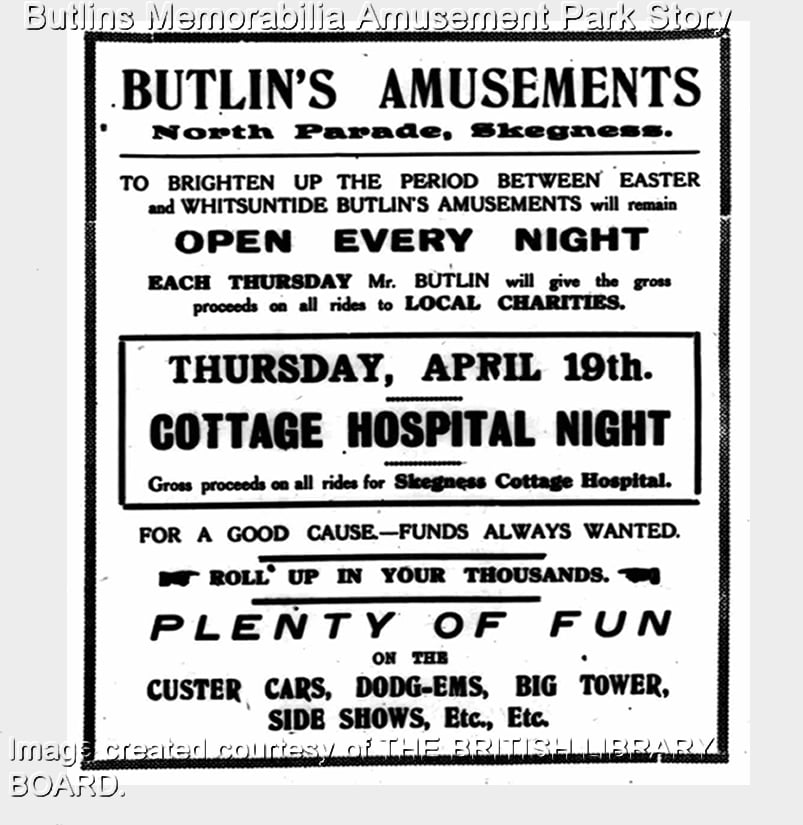
The Skegness Cottage Hospital was officially opened on the 19th of May, 1913, with its design credited to Mr. Parkinson, an architect from Blackburn. The Countess of Scarborough was present at the ceremony and took pride in introducing the new hospital to the public. Situated on Wainfleet Road, at the end of Dorothy Avenue in Skegness, the construction of the building cost £1,450, with more than £1,000 raised to support it. A golden key was reportedly given to Lady Scarborough, who announced the hospital's opening. Eventually, the hospital became part of the NHS service, and it remains operational today, looking somewhat different from its original form. In 1928, Billy Butlin created Butlins Enterprises, which featured the first Butlins amusement park in Skegness. This effort was part of his fundraising to help cover the costs of a residence for the hardworking nurses at the Skegness Cottage Hospital.
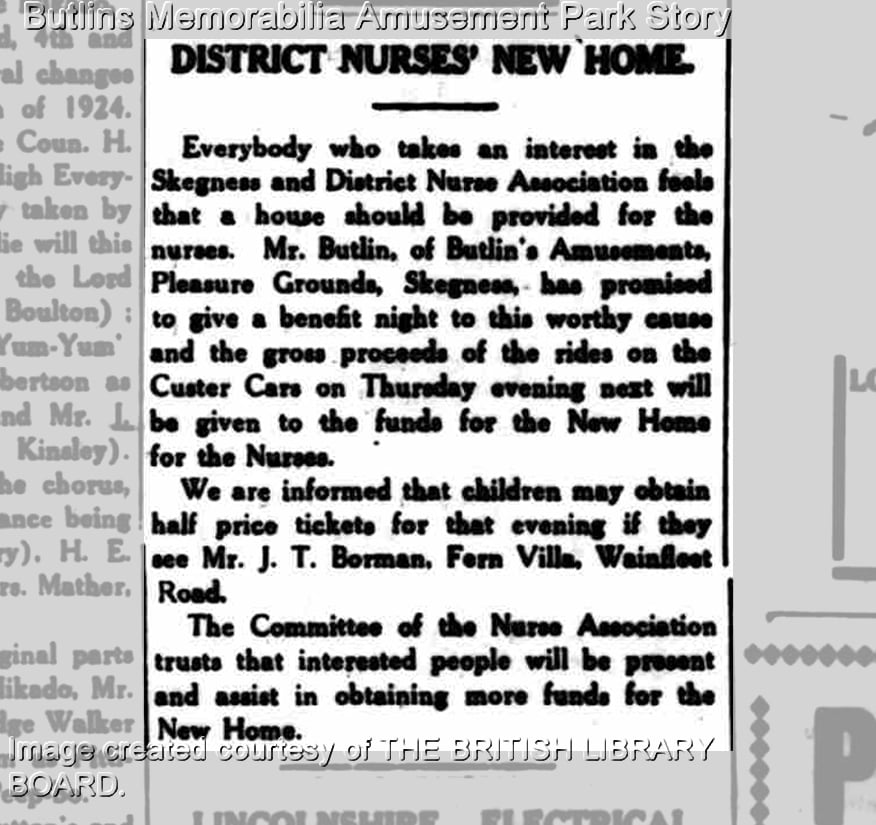
In April 1928, a special advertisement in the Skegness News highlighted Billy Butlin's involvement in helping the Skegness and District Nurses Association secure a house for the nurses. He mentioned that the gross proceeds from the rides on his Custer Cars on Thursday evening would be donated to the fund for the house, hoping to inspire others to contribute as well. Additionally, there was an offer for children who wished to attend, as they could get half-price tickets for that evening by visiting Mr. J. T. Boreman. This advertisement marked the first time I encountered the name "Butlins Amusements," and at this point, it was not yet a park but merely the early stages of one that was developing.
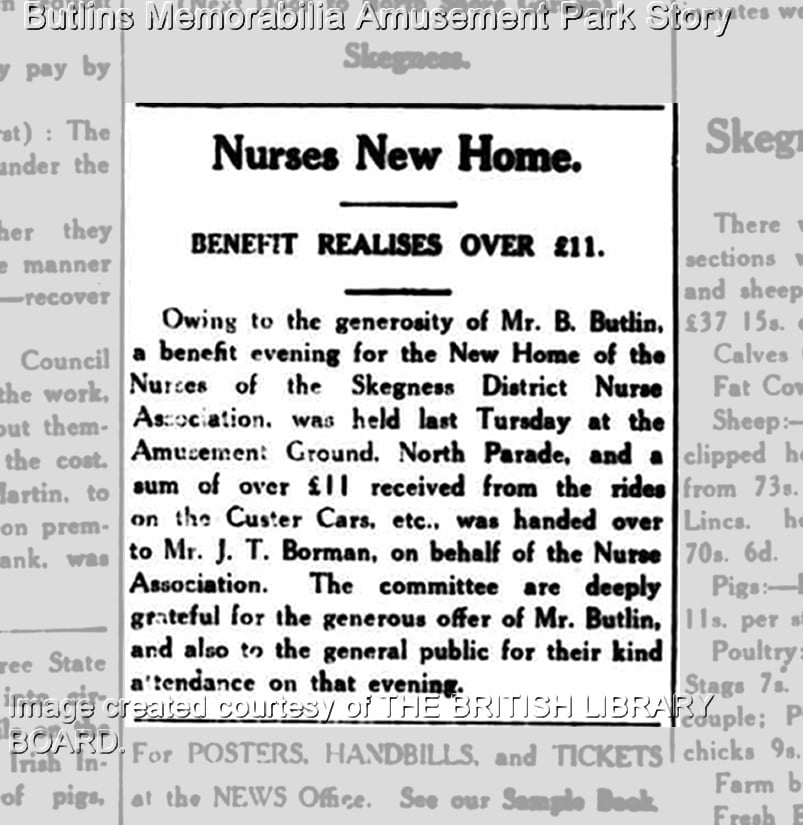
Acknowledgement was given to Billy Butlin for the £11 raised from his amusements during a special event aimed at supporting the Nurses' new home. While this may not appear to be a large sum in 2026, the Bank of England inflation calculator indicates that it would be worth £612.68 today. Considering the changes in the currency from 1920 until now, it's clear that Billy Butlin and his team did an outstanding job that evening, and this £11 would have gone quite far towards their fundraising.
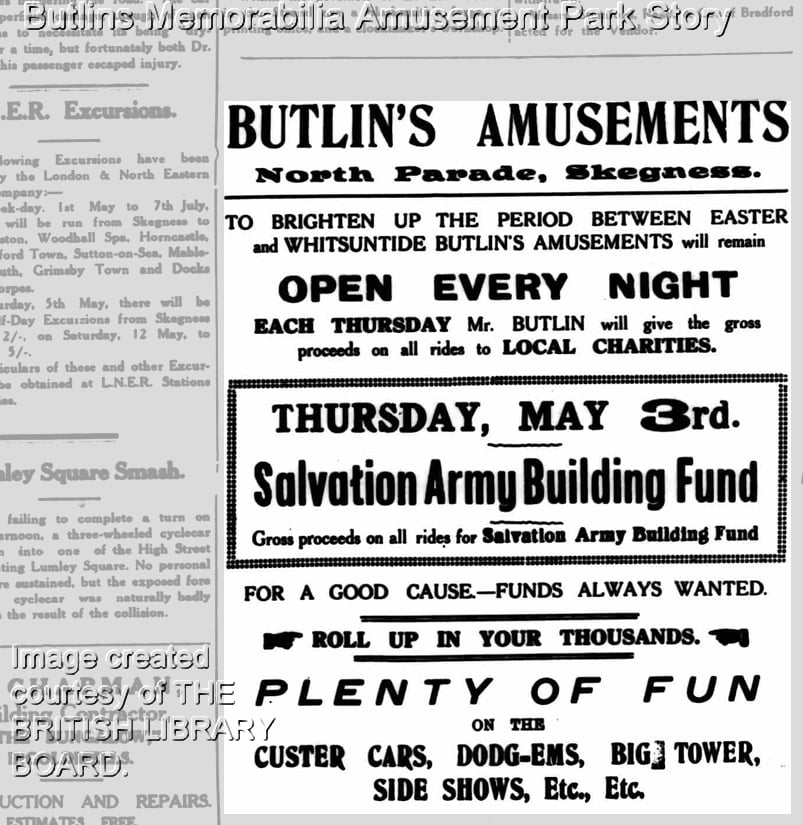
In my collection, there are many items linked to the Salvation Army and its fundraising activities. The Salvation Army originated in 1865 in East London, focusing on promoting Christianity and establishing shelters for the homeless, along with providing food. They have become a worldwide organisation and continue to raise funds for various charitable causes. For further details, you can click on these words. Additionally, their website shares the story of a woman named Linda, who began her journey in table tennis at Butlins and has received numerous awards over the years. You can access her story by clicking on these words.
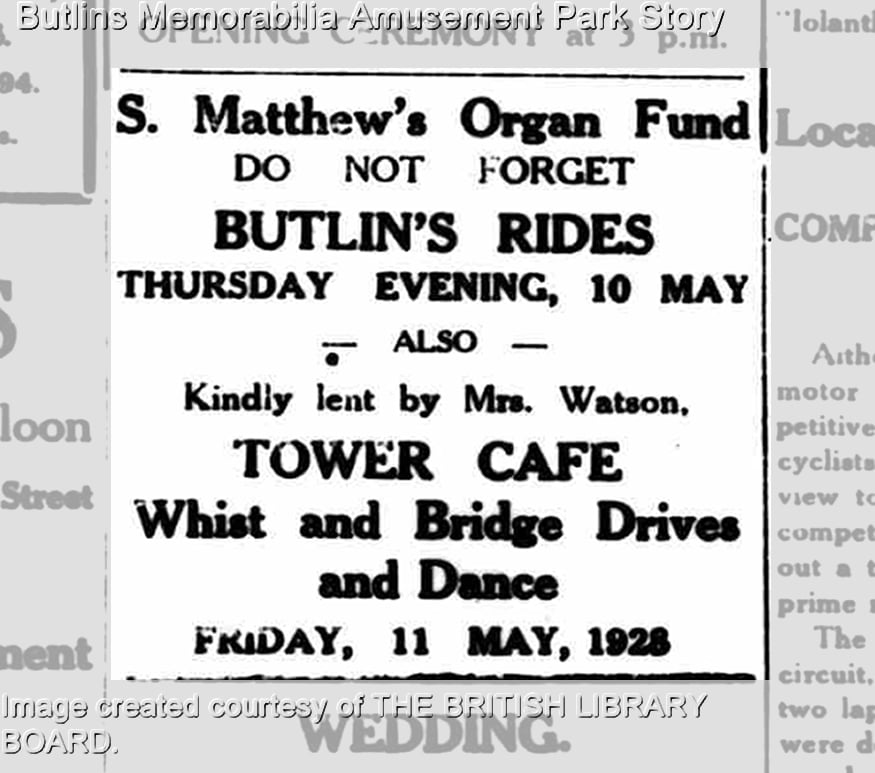
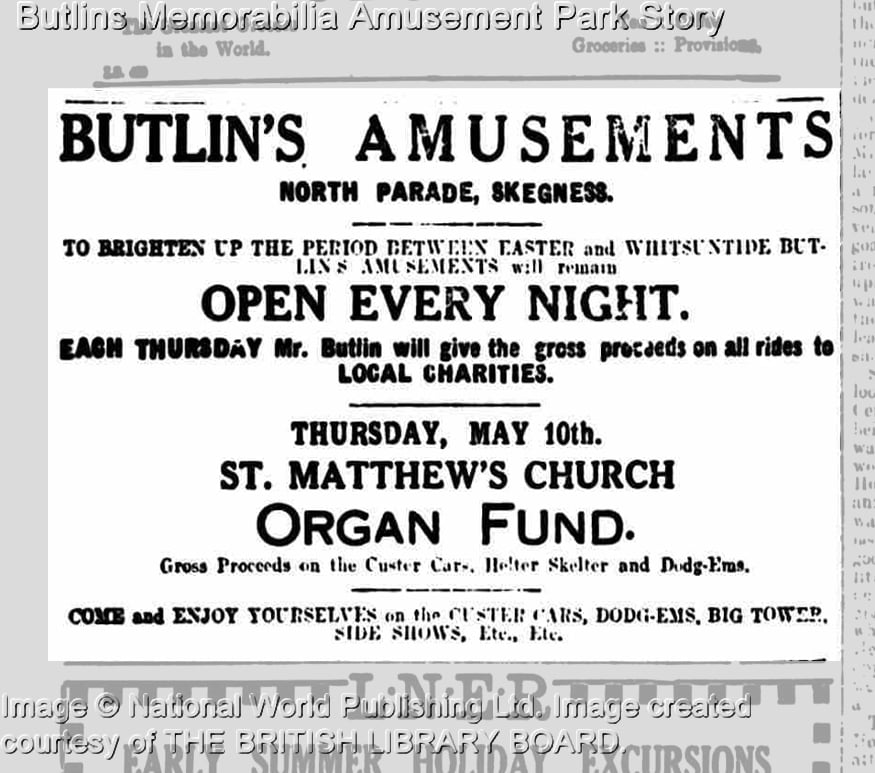
St. Matthew's Church in Skegness was designed by architect James Flower and constructed from 1879 to 1884, when it was completed. The church is situated at the centre of a roundabout on land donated by the 9th Earl of Scarborough, a significant supporter of Skegness's development. The Earl envisioned this church, dedicated to St. Matthew, as a focal point and spiritual hub. Today, the church remains active and is recognised as a Grade II listed building, showcasing a beautiful design. To learn more about this remarkable church, click on these words.
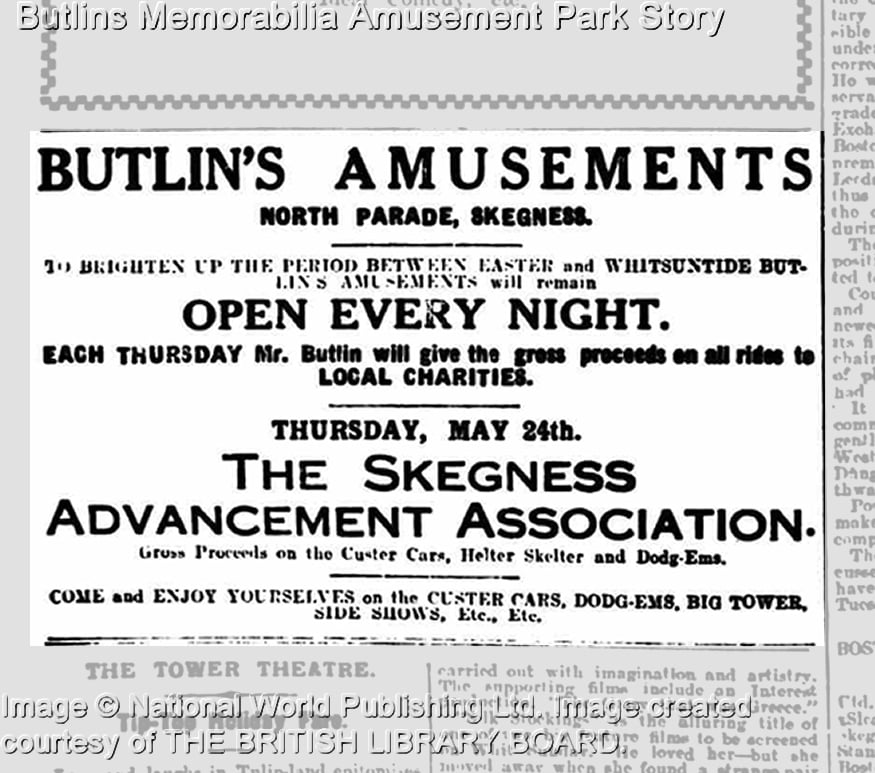
Finding information about the Skegness Advancement Association proves to be quite challenging, with very few details available. According to the Getty Images website, they produced promotional posters highlighting Skegness as a wonderful location for holidays and short breaks, but beyond that, there is a lack of information. Should you have more knowledge about this notable association, please contact me by clicking the button located further down this page.
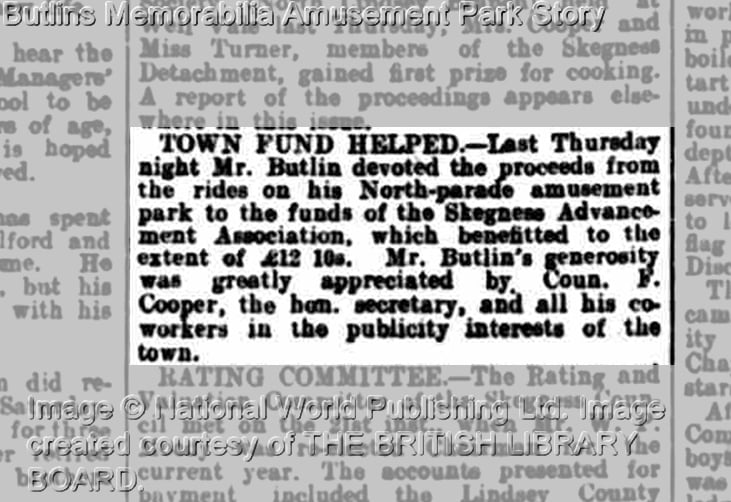
The Louth Standard published a positive article expressing gratitude to Billy Butlin for his generous donation of £12 and 10s to the Skegness Advancement Association. Councillor F Cooper conveyed his appreciation, along with his team's, for this remarkable contribution. (Worth between £670 and £727, which would have been a big deal in 1928, according to the Bank of England calculator).
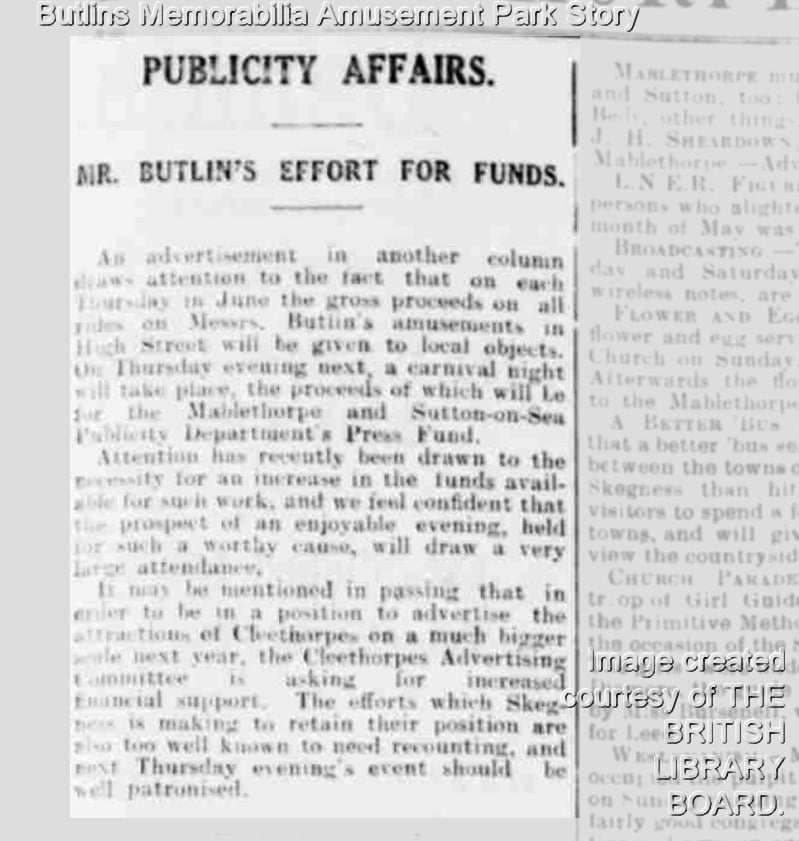
I am unable to find much about the publicity departments of Mablethorpe and Sutton-on-Sea, but I assume it had to be something important for Billy Butlin to donate towards their cause. If you know any further information, please get in touch using the button below.