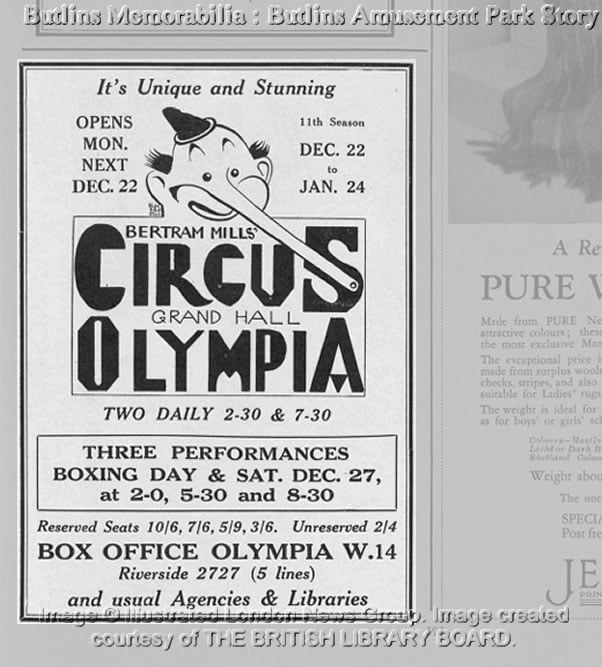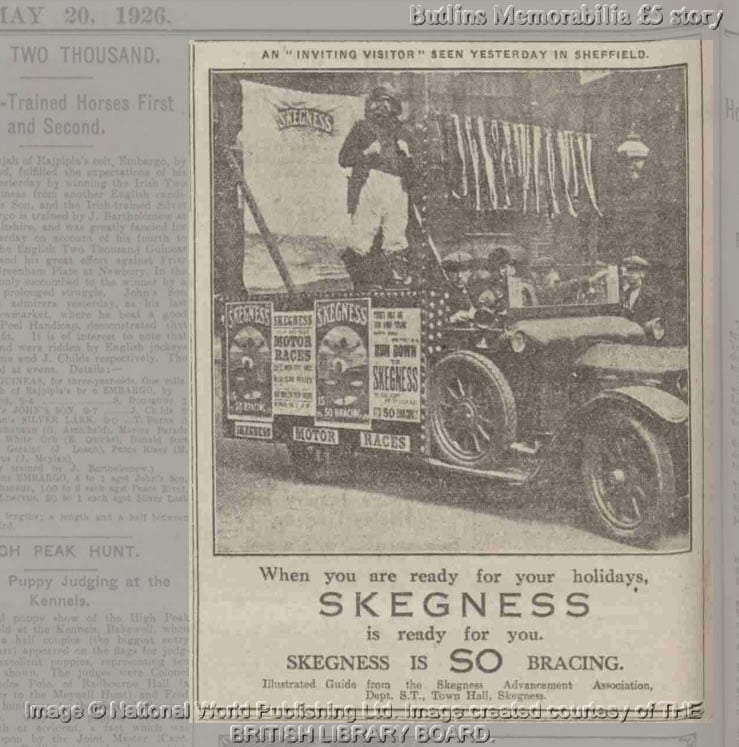
The history of Butlin's amusement parks can be traced back to the conclusion of the Olympia season in 1926/27. At this special event, a gentleman named Albert Cronkshaw was enjoying a drink at the bar. Billy Butlin often encountered Albert, who became a regular, and they began to chat. Naturally, Billy would tell Albert about everything that had happened and how proud he was of his current business, along with his ambitions to expand. This conversation would become a significant moment in Butlin's history, as Albert discussed with Billy a location called Skegness, which he believed was an excellent fit for his ideas. The importance of this moment in the history of this remarkable company is underscored by the fact that Billy Butlin had never heard of Skegness until that moment. This moment will forever be recorded in history as an extremely important moment in the Butlin's timeline, as it was here that Billy was introduced to Skegness, the place where the holiday camps began.
(If you have not read this story, please click on these words to read about the Hoopla Stall story - which is what happened before this special moment)
Currently in Butlins (as of 2026)
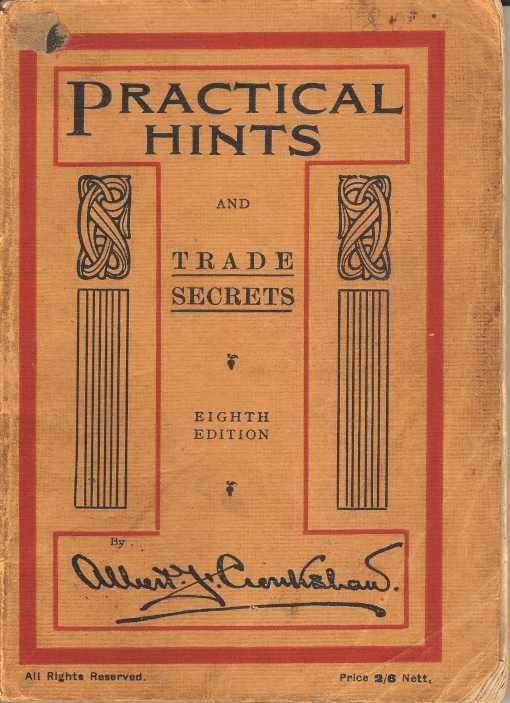
Mr Albert F. Cronkshaw is an important key figure in the history of Butlins, as he was the one who proposed Skegness to Billy Butlin on that special day. However, my attempts to find information about Mr Cronkshaw online have been quite challenging. Throughout my research, I found only one book with the same name as the one mentioned by Billy Butlin. It is essential to note that I cannot be completely certain this book is linked to this honourable man.
The book was published in 1930, which establishes a strong link to this story. Its title, "Trade Secrets," might indicate that this is the gentleman I was researching, as Billy Butlin does explain that Mr Cronkshaw was a businessman. Furthermore, he is mentioned in a newspaper clipping from the Sheffield Daily Telegraph on Thursday, June 3, 1982, detailing his connection to Butlin's and Sir Billy Butlin.
On his journey from London to Skegness, Billy Butlin recalled the changes in the view from his window, with all areas being brand new to him. He remembers passing through Peterborough and Grantham, where he encountered landscapes unlike those he remembered from the West Country. He realised that this trip would be another lesson for him, as he noticed the more industrial setting, which made him appreciate the deeper reasons people wanted holidays to break free from their daily routines. The seaside had offered a chance to escape day-to-day life and relax with enjoyment. This moment would connect to Billy Butlin's strategy for choosing his locations with care, ensuring they were situated in areas that would help people feel they could take a break and experience a different world. This part of the story would become a part of Billy Butlin's formula, which was happy staff = happy customers = excellent location = great memories created = business expansion and recognition (this is my theory and nothing official, but it's a great way to think about it this way. I call the BBforumla)
While taking notes, Billy Butlin observed another transformation as the train approached Lincolnshire, revealing another change in the scenery as he saw fields that helped him grasp the differences among various regions of the United Kingdom. These areas were unlike anything he had encountered before, as the landscapes around Boston, Sleaford, Hubberts Bridge, and Swineshead began to raise questions in his mind about Skegness, the location where he intended to launch the next phase of his Butlins company. With an open mind, he finally reached Skegness and recalled seeing a promenade known as the "Grand Parade," along with Lumley Road, which led to the Victoria Memorial clock tower. Exploring the area, he would continue to take notes on Skegness and its potential for his business growth, eager to absorb what this region had to offer.
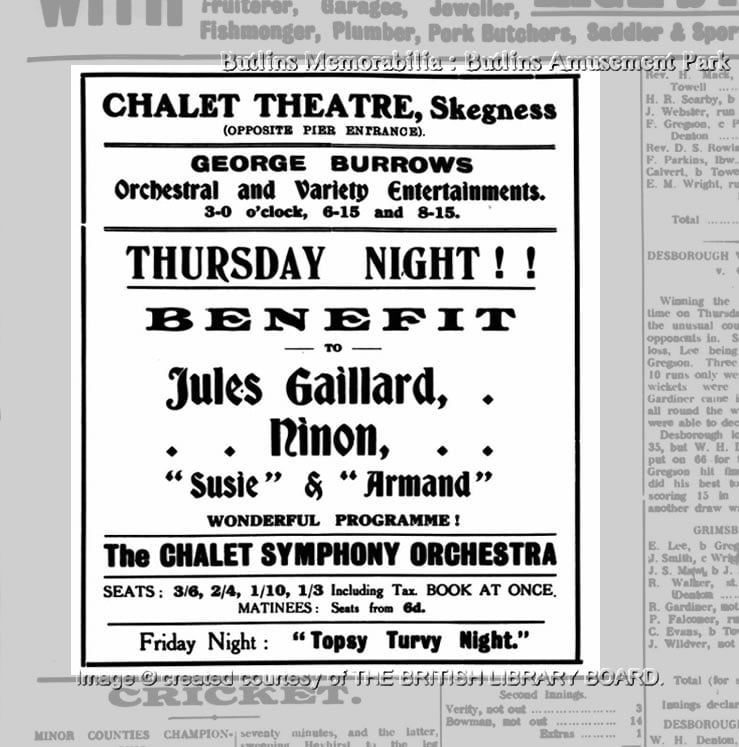
This moment in my research is incredibly thrilling for me; what are the odds of this occurring? The only word that comes to mind is 'wow'! I apologise for my excitement upon discovering this in my research. As noted by Billy Butlin on page 83, he met the owner of the wooden theatre, George Burrows. This brief encounter would provide Billy Butlin with insights into what customers were looking for to escape their everyday lives at home. However, Skegness in the late 1920s was not as developed as it is in 2026. Billy Butlin mentions fields stretching as far as the eye can see and a small area known to locals as 'The Jungle' (my excitement was the name of the theatre, quite interesting to see).
Still, the charm of Skegness was powerful for Billy, as he began to picture what this town could achieve in the summer and what it could provide for those wanting a break from their home or work. Arriving in February 1927 may not have been the best moment to experience its true offerings. As is often the case, Billy's feelings were later shown to be correct, as Skegness turned into a key destination for many individuals looking to take a break and enjoy all that it had to offer. There was an undeniable essence about this location that Billy Butlin could not dismiss as he made his way back to London on the train. The more he journeyed towards London, the more he sensed that Skegness was calling to him, leading him to decide that this would be the site for his first Butlin's Amusement Park.
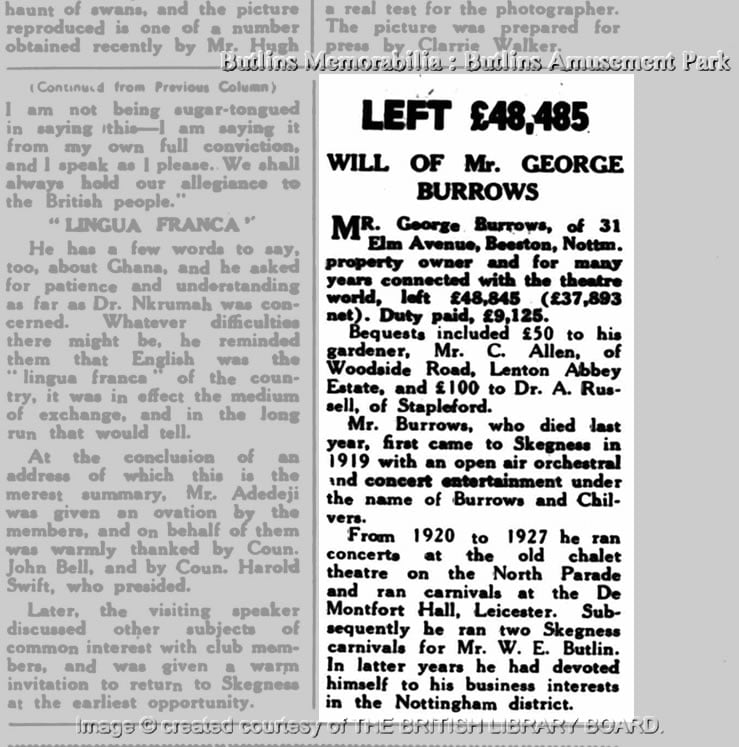
Skegness News - Friday 25 March 1960 - Link to source
From the early days of his theatre, Mr George Burrows continued to entertain a wide array of customers, which led him to become a part of the Butlin's carnivals. He became good friends with Billy Butlin.
In this article, we learn that Mr Burrows made his way to Skegness in 1919 and sadly died in 1959. He had connections to the theatre, particularly in the orchestral field. He was also engaged with carnivals at a location known as Montfort Hall. Later on, he took on the role of an auctioneer.
I place this small research here to acknowledge Mr Burrows amazing story and to pay my respects towards his contributions to the Butlins story.
Returning to Skegness, Billy Butlin was on the lookout for the perfect location for his amusement park when he found a site directly opposite a place called The Jungle. Upon investigating the land's ownership, Billy Butlin learned from a solicitor's firm that the land, including the sand dunes, belonged to the Earl of Scarborough. This was an unexpected turn for Billy Butlin, who thought there was little to no chance of securing this area for his venture. The solicitors he spoke with also informed him that the Earl was not likely to support the concept of an amusement park at this location, even if the council gave it the go-ahead. It was another challenge for Billy Butlin, and one thing was for sure: he always knew how to find a solution.
On the other hand, Billy Butlin had simply thought, "What’s the worst he could say... no?" Although perhaps not in those exact words, he believed it was worth attempting. When he approached the Earl of Scarborough directly, Billy Butlin detailed everything to the Earl and received an encouraging response. The proposal was outstanding, and since the 10th Earl of Scarborough was a major supporter of increasing tourism in Skegness, he instructed his agent, Mr Foster, to lease the land for the summer, specifically 100 yards on the land opposite the Jungle, for a price of $50. This was wonderful news, but Billy had no time to celebrate as he began to prepare for the next aspect of his plans.
The biggest problem he faced was that the land was largely composed of sand dunes, and at that time, Billy had very little money left to pay for levelling it. The challenge was that he could not open his amusement park until the sand dunes were levelled. To resolve this issue, Billy Butlin noticed that sand was always in demand by builders and other industries, and there was a lot of it on the land he had just leased from the Earl of Scarborough. To address his issue, he promoted that anyone could buy the sand for five shillings per truckload, provided they did all the work. This strategy was so successful that within a couple of months, the area was levelled at no cost to him, while also generating revenue in the process.
The first Butlin's amusement park opened its doors for the first time during Easter 1927. Consider this for a moment: the story starts with a young man who travelled from Canada in 1921, facing many obstacles to ultimately, in 1927, establish his own amusement park in Skegness. The new park included four hoopla stalls, a helter-skelter slide, a homemade haunted house, and a small electric car ride. The amusement park performed exceptionally well, leading Billy Butlin to expand with a second site in Mablethorpe. The Butlin's amusement parks were finally on the United Kingdom map but there was still more that needed to be done.
In that moment, Billy Butlin considered, "I am no longer a travelling showman," even though he frequently lived like one, and that sense of being a showman would never fade away. From what I read from his book, I can see it was more about achieving a high level and succeeding, even though there was still more work to be done. He lived in a caravan alongside Dorothy, while his mother occupied the wagon next to his. The workload for Billy, Dorothy, and Bertha Butlin would greatly increase as the land expanded on various sites, new locations began to emerge, and without realising became his own riding master (though those are not his own words, just based on what I can see from the research I have discovered). This young entrepreneur, who initially worked independently, was now in charge of fifty staff members and, during peak seasons, had over one hundred individuals working under him.
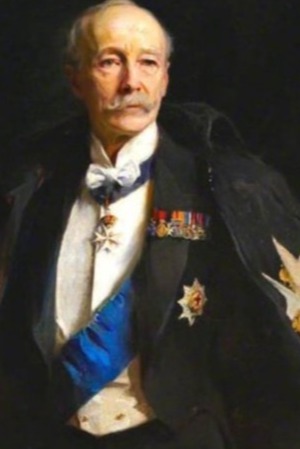
Aldred Lumley, 10th Earl of Scarbrough - credit for photo
This picture shows the 10th Earl of Scarborough, Major-General Aldred Lumley, who granted Billy Butlin the opportunity to establish his empire. The Butlins story reveals that Billy reached out to the Earl of Scarborough about his land, but no name is provided. After conducting more research, I learned that Major-General Aldred Lumley was the very person involved in this incredible history.
Major-General Aldred Lumley was born on November 16, 1857, at Tickhill Castle. He was the second son of Richard Lumley, the 9th Earl of Scarborough, and Frederica Drummond, who was the granddaughter of the 5th Duke of Rutland. The Major-General's career began in 1877 and continued until his retirement in 1921, when he held the title of Major-General. On March 10, 1923, he was also appointed as the Honorary Colonel of the 54th (West Riding & Staffordshire) Medium Brigade, Royal Artillery.
The Major-General had a considerable amount of land in Skegness and was committed to the town's growth, aiming to establish it as a relaxing holiday destination. Major-General Aldred was instrumental in the development of Skegness, which included the creation of the pier, promenades, parks, gardens, and hotels.
You can read more about this amazing gentleman by clicking on these words (opens a new window)
The businesses were thriving, yet Billy Butlin faced moments that tested his trust due to certain staff members who sought to break the rules. He encountered problems with employees taking their share of the profits for themselves, including concealing money in the sand for later retrieval. To address this issue, Billy Butlin implemented a new rule aimed at curbing what he termed 'Fiddling,' which was to prevent staff from accessing their pockets. This was achieved by altering the uniforms to feature pocketless jackets that extended down to cover the trouser pockets. The challenge with theft was that it often began on a small scale and could escalate into a much larger issue, something he was determined to prevent. Fortunately for Billy Butlin, the majority of his employees appreciated their work environment and what he provided, making these incidents a small minority, which would be dismissed upon discovery.
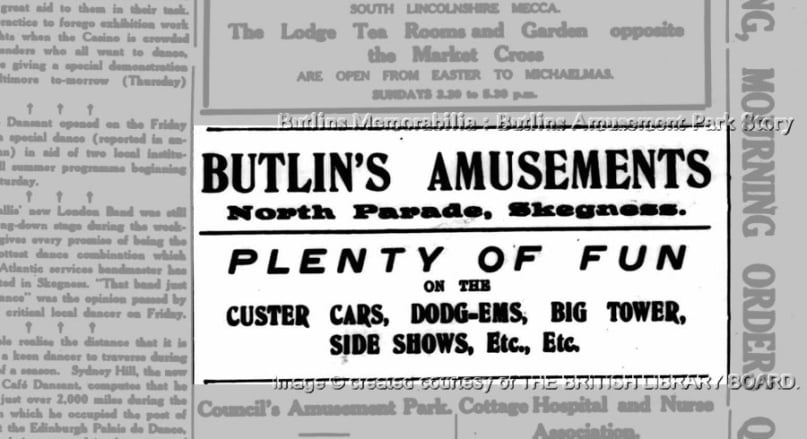
Butlins would be known in the newspapers as Butlins Enterprises, with every penny made from the profits reinvested into the business to enhance offerings and meet new demands as they arose. We are now at a very important moment in the Butlin story where everything would transform for Billy Butlin, as we delve into the creation of a legendary ride. During his time in Toronto, Billy Butlin remembered a ride called "Custer Cars," which were battery-operated cars that could be driven around. He had never seen anything like this before and often contemplated whether the ride would thrive in the United Kingdom.
While in Olympia during Christmas, he met with an American manufacturer who wanted to discuss a new fairground ride they believed could perform well in the United Kingdom. This ride was called "Dodgems," and Billy was provided with all the information on how it functions and why he should be the one to invest in this idea. After reviewing the details, Billy understood that it was a significant upgrade from the Custer's cars he had observed in Canada, and as with all business decisions, he knew this was a wise choice. Following a handshake, the agreement was reached, and Billy Butlin obtained the UK franchise.
Billy had confidence in his decision, as he recognised that the closest ride resembling this one was a bathtub-shaped attraction that revolved in circles, yet the dodgems were much better. The idea of a ride where you dodge collisions or sometimes bump into others can be a major appeal for numerous customers. The only drawback was the franchise cost of £2000, which included the ride itself, but Billy Butlin was £200 short. By borrowing the necessary funds, the investment paid off, becoming an instant attraction and a success for many. The ride first debuted at Butlin's Skegness in 1928, marking the beginning of a new chapter for Billy Butlin. This ride's concept swiftly circulated among the fairs, with increasing demand from customers who wished to experience it. Billy Butlin was engaged in selling the cars and sometimes supplied them to others, on the condition that he would earn a share of the rides profits.
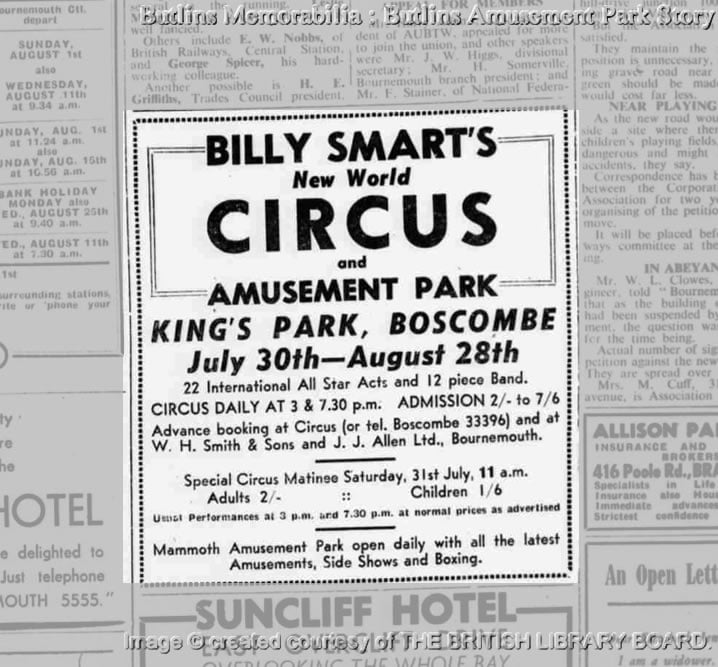
The dodgems also featured an additional narrative that highlighted a close friend of Billy Butlin. This friend, named Billy Smart, was at the beginning of his journey, much like Butlin, and was seeking support and assistance. Billy Butlin was known for his fairness and his desire to see everyone succeed, and he aimed to help his friend get off to a great start, reminiscent of the special day when his uncle Marshall supported him by gaining acceptance into the Showmen's Guild. Consequently, Billy Butlin agreed to let him have the dodgems under a handshake agreement, promising to repay him once he had the financial means.
This demonstration of kindness is what the showman was known for, as they wish to enable others to realise their dreams. When Billy Butlin started his journey in Dorney's Yard, we saw the showmen work together to design that amazing and very important stall that initiated the dream for Billy Butlin. They came together to assist with the swag and to help Billy gain confidence in his actions, which he now does for others. Billy Smart became very successful with his circus, being very well known and even being on television. After Mr Smart died in 1966, Sir Billy Butlin described his friend as "the greatest showman of our time and probably the last of the great showmen," reflecting the strong connection between the two after all these years.
The tale of Dodgem's ride is a journey that has become iconic, but behind the scenes, it was a journey that altered many lives, including that of Billy Butlin. This journey allowed him to generate enough income to purchase his own house, which he had not been able to do since relocating from Canada. With his finances now in a favourable position, Billy Butlin began to open additional amusement park locations, with his mother, Bertha Butlin, helping to manage the one at Bognor Regis. The challenge with these new locations was that he needed a way to oversee them. The solution may come as a surprise, as it did for me; he decided to acquire an ambulance that had been modified to include a bed. He notes on page 89 that there were moments when he would fall out of bed during sharp turns while another person was driving, but this idea turned out to be the best solution for him.
New rides like the Big Dipper and Figure Eight began to appear in the amusement parks, but each addition had financial implications. Billy Butlin's approach to business was always the same throughout his life: maintain confidence in your pursuits and ensure they are profitable. The dodgems were a new venture, yet he was confident they would succeed, and they did. The amusement park was a different concept from the stalls, but it was effective, and the idea of a travelling showman in Olympia was a risky move that ultimately proved successful.
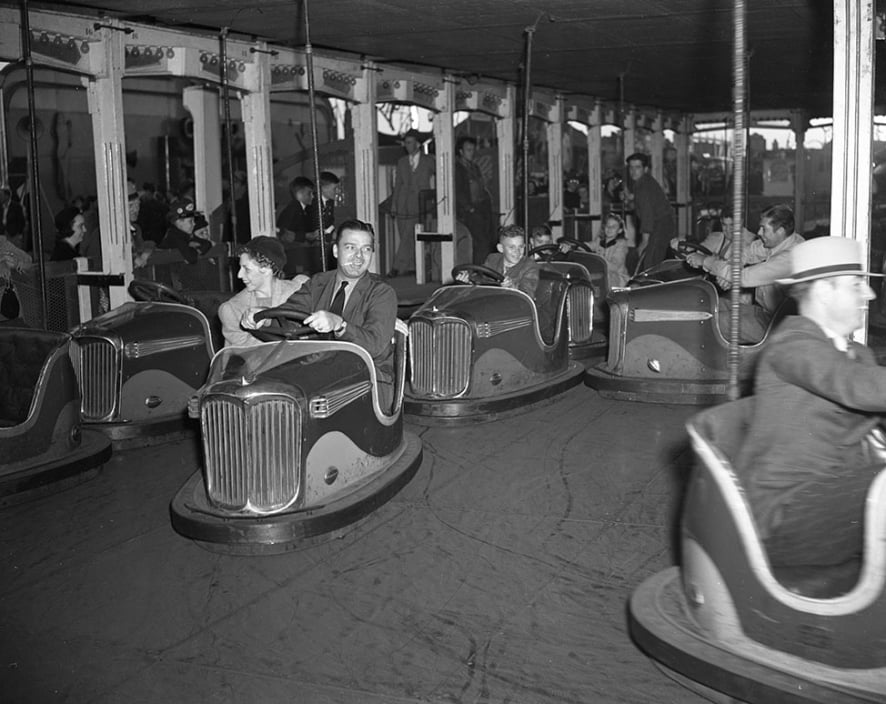
State Fair, October 1940 - image credit link
In the 1920s, the concept of a ride allowing participants to either bump into each other or avoid collisions (which depends on the operators; Butlins currently has a no-bumping rule for safety) was developed by Max Stoehrer and his son Harold. This idea was presented with two leading US brands that designed the cars for the ride.
This concept was initially patented in 1921, evolving into an iconic attraction that remains popular to this day. The ride can be found in Butlins and various other locations worldwide, and it is famously linked to the legendary tale of Billy Butlin. You can research more about this amazing ride by clicking on these words.
Billy Butlin was a man who believed that if you expect someone to do a job, it is best to try the idea yourself and understand what it was all about. At the Olympia Circus, there was a moment when Billy Butlin was doing maintenance on his Dodgems ride. Billy Butlin never had a problem with getting involved with his staff and would often be covered in oil and grease. This one particular time, he had a lot on his mind and knew from experience that sometimes it is better to take action instead of letting it weigh on your mind. Not being able to stop thinking about his idea, he told his staff he would not be long and could they continue working on the Dodgem car. Billy Butlin explained that he needed to visit and chat with Bertham Mills about something very important. Dusting himself off but still covered in stains, Billy Butlin would make his way up the stairs to a door marked "Private". This was a particularly memorable moment for Billy Butlin, as he would have reminded himself of the need to be direct, confident, and to explain everything he had planned. Looking at the door, I can imagine him thinking, "This is it, come on, Billy, you can do this, it's now or never, and I cannot let this opportunity pass me by." After knocking on the door, he entered to find the office frequently used by Mr Bertham Mills, who was seated at his desk. Not turning to look at Billy Butlin, he continued his work and said, "I am too busy to talk or see anyone today; come back later." Unlike others, Billy Butlin was a person who knew how to respond to situations like this and how to change the feeling inside the office, as I picture him smiling and thinking, "Another challenge that I can tackle."
Billy Butlin was filled with confidence and would respond by questioning whether Mr Bertham Mills was too busy to discuss business opportunities that could lead to good profits. This challenge prompted Mr Bertham Mills to engage in a debate about the benefits of their conversation. This is where the magic of Billy Butlin began, as he talked about his plans to take complete control of all the amusement park rides and stalls at Olympia for the upcoming Christmas event. Billy wanted the circus to include Butlin's stalls and rides, and he spoke with great pride about how this would work for both of them. Initially, Billy Butlin thought this conversation would only last thirty minutes, but it ended up continuing for a couple of hours, finishing around three o'clock in the morning.
At the conclusion of their meeting, a gentleman's handshake marked the moment as Mr Bertham Mills approved his request to manage all the amusements for the next few years. The next task was in 1930, Billy Butlin had to find £5000 to cover the rent for the Olympia, Kelvin Hall, Glasgow, Waverley Hall, and the Edinburgh sites. The issue he faced was the limited funds in the bank to pay this bill, as Billy was consistently investing in his next project. When he approached his bank, Billy Butlin was hoping for some help with a loan, assuring them that he would repay it from the profits generated by the special events he had planned. However, acquiring the loan was never going to be simple, as the bank insisted that authorisation was necessary at a much higher level, which would take time to secure. This was not the answer he needed, and he knew that there had to be an alternative plan for his plan to work.
Bob Larkin
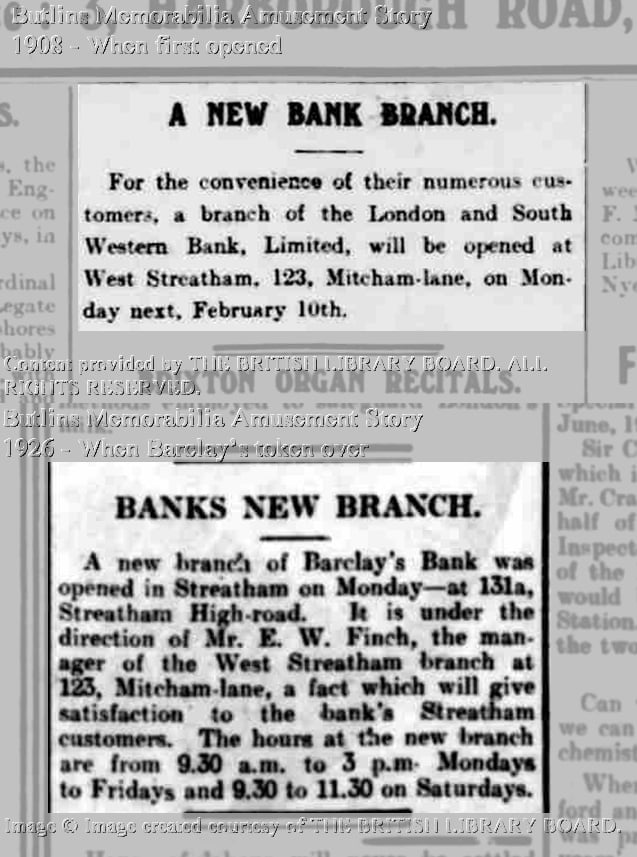
At this point, Billy Butlin was considering his options and began a conversation with his longtime friend, Mr Bob Larkin. They engaged in a thorough discussion regarding the plans and the potential returns from the sites he intended to manage. I can imagine Billy Butlin feeling a strong sense of pride as he detailed his past achievements and plans for the next stage in his business, despite facing one obstacle in his way. Bob Larkin recognised his friend's enthusiasm for the project and suggested that he visit Barclays Bank located at 123 Mitcham Lane, confidently stating that he could obtain a loan of £5000 from them. His friend reassured him that securing a loan from this bank would be easier to get from here than the one has already tried before, and he offered to speak on his behalf. Although Billy was not particularly hopeful, he figured it wouldn't hurt to take his friend's advice.
Mr Howard Roberts
When arriving at 123 Mitcham Lane, I can imagine a young Billy Butlin reflecting on what he needed to explain to feel confident and ready to present his plans, along with the benefits they would bring. Once inside, Billy Butlin would request to speak with a manager about a loan he required. The individual who would be interested in what Billy Butlin wanted to discuss was Mr Howard Roberts, the bank manager at that time. As Howard Roberts approached Billy Butlin, he would see a gentleman who had grease on him, not looking particularly sharp, but a person willing to work hard to get things right. As their conversation unfolded, Howard Roberts would eventually ask why Billy Butlin's clothing was in such a condition. Billy Butlin explained that on that specific morning, he had noticed that an engine had been installed incorrectly in a dodgem car.
This installation could have led to someone experiencing serious harm, and Billy Butlin was not prepared to let that happen. Mr Howard Roberts was impressed by this mindset and asked, "Is that your car outside with the engine inside?" Billy Butlin responded, "Yes, I wanted to make certain that the engine was installed correctly, and without my oversight, I could not risk allowing someone else to do it. By having the engine with me, I can show them the proper way to install this crucial equipment to ensure it operates as it should." This assurance, which is also mentioned on page 90 of his book, truly impressed Howard Roberts, as he valued Billy Butlin's commitment to following the right procedures for safety and his role as a leader in demonstrating that there is always a more effective way to do things.
As the conversation continued, Mr Howard Roberts was quite pleased to assist Billy Butlin with this crucial loan, recognising him as a businessman who had a clear vision for his future. He saw a man unafraid to get his hands dirty, someone who understood his customers, and a person brimming with confidence in the brand he was offering for everyone to enjoy. This attitude enabled Mr Howard and Billy Butlin to create a strong bond in the future, demonstrating to the bank manager that Billy was an emerging entrepreneur. Billy was granted this loan to someone relatively unknown at the time, who held a strong place in his heart. Billy Butlin would remember this for many years and moved all his Butlin accounts, along with his personal account, to this branch when he required. When the Rank organisation acquired Butlins, he believes they might have taken the Butlins account away, but that can not be confirmed, but this small moment at this bank was a key stone to the future of the Butlins name. With this loan secured, Billy Butlin was able to support his staff during the winter months by launching winter fairs, and due to his success, he was able to open nine amusement parks.
That is where we look more into the story of Rex the Lion and the amusement parks. Click on the button below to see more and I highly recommend that you check the story of the Butlins Lion named Rex, it had an interesting impact on Billy Butlin and is related to the Butlins Bognor Regis and Butlins Skegness amusement park zoo story!
Today, we discovered another Butlins animal called Rex and explored how the amusement parks had a challenging beginning before achieving their eventual success. Please click the button below to read more about the story of Lion Rex and to learn more about the amusement parks as I delve deeper into this fascinating history.